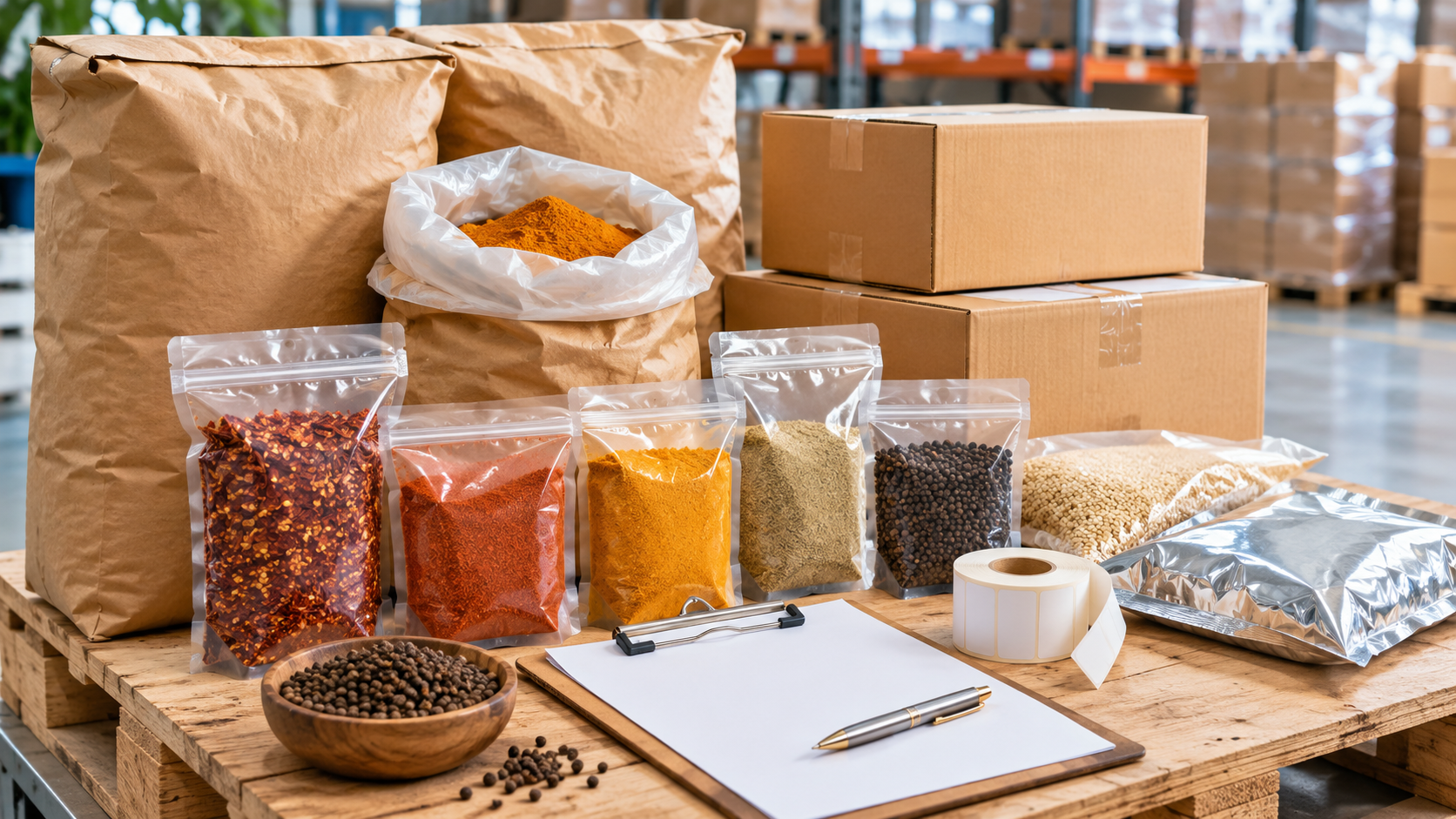
Bulk food packaging plays an important role in protecting food ingredients, maintaining product quality, and supporting storage and distribution. For international buyers, choosing appropriate packaging materials, sizes, and labeling specifications is an essential part of product sourcing.
Different food products require different packaging solutions. Dry spice powders may need protection against moisture and aroma loss, while fresh produce, chilled meat, and frozen seafood have different handling and packaging requirements.
YA Corporation Co., Ltd. is a Thailand-based trading and sourcing company focusing primarily on food and agricultural exports. The company’s main product focus includes spices, seasoning ingredients, and herb powders, alongside six other product groups.
This article explains important bulk food packaging considerations for importers, distributors, food manufacturers, and international B2B buyers.
Why Bulk Food Packaging Matters
Packaging serves several purposes beyond simply holding a product.
Appropriate packaging can help protect food from contamination, moisture exposure, physical damage, and unsuitable handling conditions.
Packaging also affects transportation, warehouse storage, product identification, and the practical handling of shipments.
When evaluating bulk food packaging, buyers should consider the product’s characteristics, intended application, destination market, and expected storage conditions.
Common Bulk Food Packaging Materials
Different packaging materials offer different levels of protection and functionality.
1. Multiwall Kraft Paper Bags
Multiwall kraft paper bags are used for certain dry food ingredients and powders.
They can provide a practical outer packaging format for bulk handling. Depending on the product, a suitable inner liner or barrier layer may be required to protect against moisture and contamination.
The suitability of paper bags should be evaluated according to the intended food-contact application and handling conditions.
2. Woven Polypropylene Bags
Woven polypropylene (PP) sacks are another packaging option for certain bulk dry products.
They are commonly considered where mechanical strength and handling durability are important.
For products requiring additional protection, an appropriate food-contact inner liner may be necessary.
3. Laminated and Barrier Packaging
Laminated packaging structures may incorporate multiple material layers to provide specific barrier properties.
For spice powders and aromatic ingredients, buyers may evaluate packaging designed to limit moisture exposure, oxygen transmission, or aroma loss.
The actual barrier performance depends on the packaging structure, seals, product characteristics, and storage conditions.
4. Cartons and Secondary Packaging
Corrugated cartons and other secondary packaging materials can help organize smaller packs and provide protection during distribution.
Cartons may also be combined with inner bags, pouches, or other suitable primary packaging.
Buyers should distinguish between packaging that directly contacts food and packaging used only for outer protection.
Choosing Bulk Food Packaging Sizes
Packaging size should be selected according to the product, order quantity, handling method, and intended distribution channel.
For example, buyers may inquire about 1 kg, 5 kg, 10 kg, 20 kg, or 25 kg packaging formats for certain dry food products.
These are illustrative inquiry sizes, not confirmed packaging options for YA Corporation products.
Actual pack sizes depend on supplier capabilities and commercial agreements.
When discussing pack sizes, buyers should identify:
- Required net weight per bag or carton
- Number of packages per order
- Preferred packaging materials
- Inner liner requirements
- Maximum package weight for handling
- Palletizing and transportation requirements
Clear packaging specifications make it easier to compare sourcing proposals.
Packaging Requirements for Spice and Seasoning Powders
Dry spice powders are an important product focus within YA Corporation’s sourcing scope.
Examples include chili powder, turmeric powder, garlic powder, onion powder, black pepper powder, ginger powder, and selected herb powders.
Packaging requirements for these ingredients may differ according to their moisture sensitivity, particle size, aroma, and intended application.
For example, turmeric powder may require consideration of color protection and moisture exposure, while aromatic powders may benefit from packaging with suitable barrier characteristics.
Before confirming packaging, buyers should discuss the product specifications, storage requirements, inner packaging, and sealing method with the supplier.
For additional information about ingredient sourcing, see Thai Spice Powder Sourcing.
Packaging Considerations Across Seven Product Groups
YA Corporation’s broader sourcing scope includes seven product groups, each with different packaging considerations.
Fresh Fruits: Packaging may require ventilation, cushioning, suitable carton strength, and protection against physical damage.
Fresh Vegetables: Packaging selection may consider moisture management, airflow, product sensitivity, and handling conditions.
Nuts and Seeds: Suitable packaging can help manage exposure to moisture and other factors affecting storage quality.
Spices, Seasonings, and Herb Powders: Packaging may require appropriate moisture barriers, inner liners, and protection of product characteristics.
Chilled and Frozen Meat: Packaging must be appropriate for product hygiene, temperature control, and the intended handling method.
Fresh, Chilled, and Frozen Seafood: Packaging requirements depend on product form, moisture conditions, temperature management, and destination-market requirements.
Other Products: Packaging must be evaluated according to the specific characteristics of each product.
These considerations should be reviewed individually rather than assuming one packaging format is suitable for every product.
Food-Contact Safety and Packaging Compliance
Packaging materials intended to contact food must be suitable for their intended use and comply with applicable requirements.
Depending on the destination market, buyers may need information about packaging composition, intended food-contact conditions, supplier declarations, or relevant supporting documents.
For internationally recognized regulatory guidance, buyers can review the European Commission’s Food Contact Materials information and the U.S. Food and Drug Administration’s food packaging information.
Requirements differ by material, product application, and market.
A packaging supplier’s general description should not be treated as proof of regulatory compliance without appropriate verification.
Labeling and Product Identification
Clear identification is important for bulk food packaging used in international trade.
Depending on product and destination requirements, package information may include:
- Product name and description
- Net weight
- Country of origin
- Lot or batch identification
- Production or packing date
- Best-before or expiry information, where applicable
- Storage and handling instructions
- Manufacturer or other required business details
The information provided should correspond to the actual product and relevant supporting records.
Labeling requirements should be confirmed before artwork or packaging specifications are finalized.
What International Buyers Should Include in a Packaging Inquiry
When requesting a quotation for bulk food products, buyers should provide enough packaging information for the supplier to assess feasibility.
An initial inquiry may include:
- Product name and specifications
- Required packaging type and material
- Preferred net weight per package
- Expected order quantity
- Inner liner or barrier requirements
- Labeling and artwork requirements
- Destination country
- Storage and handling requirements
- Applicable packaging compliance requirements
These details can support a more accurate discussion of product suitability, packaging availability, and commercial terms.
YA Corporation’s Trading and Sourcing Approach
YA Corporation operates as a trading and sourcing company rather than a packaging manufacturer or food producer.
The company reviews product and packaging requirements and explores suitable sourcing and commercial options.
Packaging options, specifications, quantities, costs, and documentation remain subject to confirmation by the relevant supplier.
The company’s primary business direction is export-oriented, while suitable import-related opportunities may also be considered according to product requirements and operational readiness.
Contact YA Corporation Co., Ltd.
International buyers interested in bulk food ingredients and agricultural products are welcome to submit their sourcing inquiries.
Please include your product requirements, preferred packaging materials, pack sizes, estimated order quantities, and destination country.
Email : yacorporationthailand@gmail.com , info@yacorporationthailand.com
Website: https://yacorporationthailand.com/
Product sourcing, packaging availability, specifications, documentation, and commercial arrangements are subject to supplier confirmation, applicable regulations, and mutual agreement.
Comments are closed