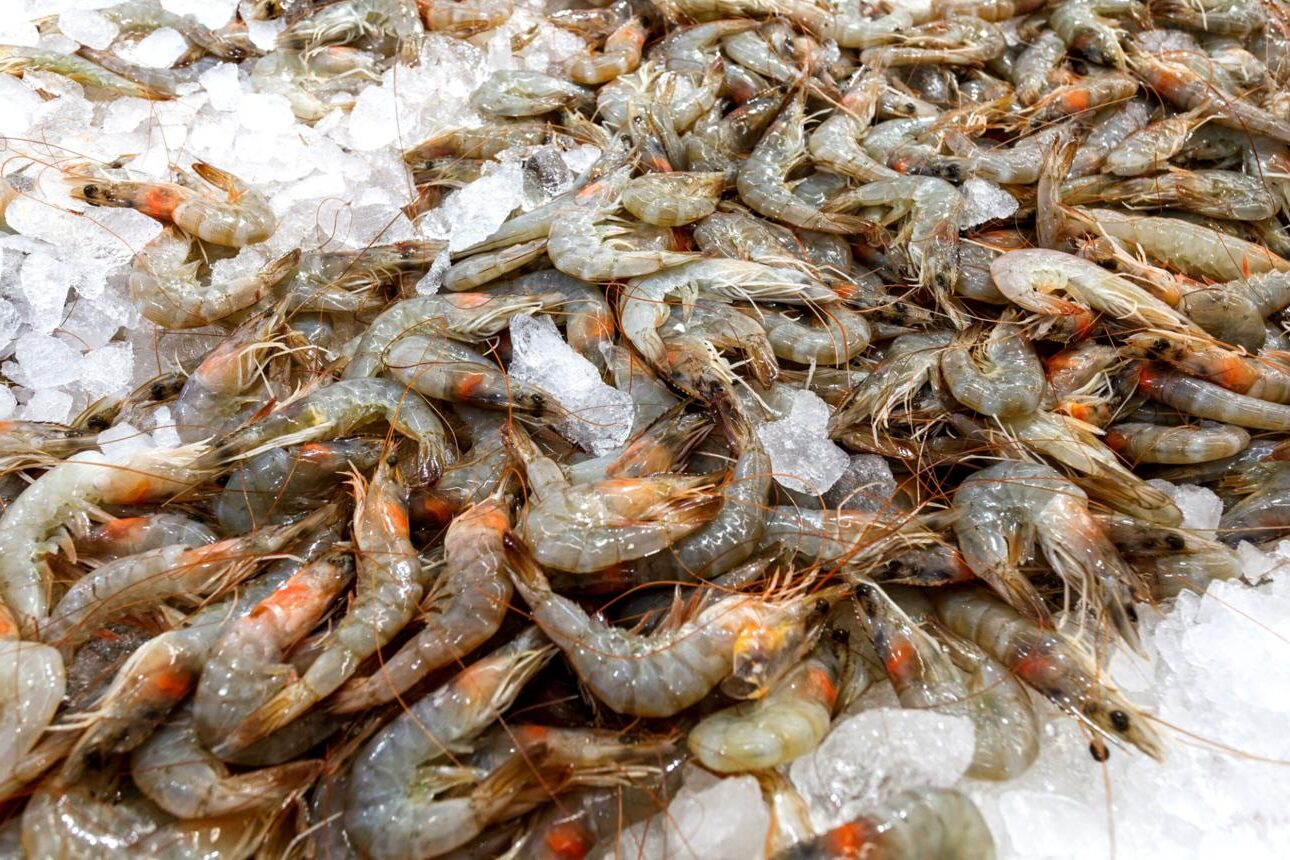
Frozen shrimp is an important seafood ingredient used in international food supply chains, including wholesale distribution, retail, food service, and food manufacturing.
Frozen shrimp products are available in different species, processing forms, size counts, and packaging formats. These characteristics influence product selection, preparation requirements, pricing comparisons, and suitability for particular food applications.
For international importers, distributors, and food manufacturers, understanding these differences is essential when evaluating seafood suppliers.
This article explores frozen shrimp processing forms, commercial size counts, freezing methods, quality characteristics, and important product sourcing considerations.
1. Understanding Frozen Shrimp Products
Frozen shrimp products are produced by processing shrimp and freezing them under suitable controlled conditions.
Common commercial shrimp species include whiteleg shrimp (Penaeus vannamei, also known as Litopenaeus vannamei) and black tiger shrimp (Penaeus monodon).
These species can differ in appearance, size, texture, and other product characteristics.
Commercial products may be supplied whole, headless, peeled, deveined, raw, or cooked.
The appropriate product form depends on the buyer’s intended application and commercial requirements.
Freezing helps preserve product quality and inhibits microbial growth while suitable frozen conditions are maintained. However, freezing does not reliably eliminate harmful microorganisms.
2. Common Frozen Shrimp Processing Forms
Frozen shrimp is available in several processing forms commonly identified by industry abbreviations.
Head-On Shell-On (HOSO)
HOSO refers to shrimp with the head and shell retained.
This form is commonly selected when whole-shrimp presentation is important.
Buyers should confirm head condition, size count, species, and packaging specifications.
Headless Shell-On (HLSO)
HLSO shrimp have the head removed while the shell remains attached.
This form may be suitable for further processing or culinary applications requiring shell-on shrimp.
Peeled and Deveined (PD or P&D)
Peeled and deveined shrimp have the shell removed and the intestinal tract removed according to the agreed processing specification.
Buyers should confirm whether the tail is retained or removed.
Peeled, Deveined, Tail-On (PDTO)
PDTO shrimp have the shell and intestinal tract removed while the tail section remains attached.
This form may be preferred for selected restaurant dishes, prepared foods, and food presentation.
Peeled Undeveined (PUD)
PUD refers to shrimp with the shell removed but without the deveining process.
This differs from peeled and deveined products.
Before purchasing, buyers should confirm the exact processing form rather than relying only on abbreviations.
3. Understanding Frozen Shrimp Size Counts
Frozen shrimp is commonly classified by the number of shrimp contained within a specified unit of weight.
This system helps buyers compare shrimp sizes when the measurement basis is consistent.
For example, when the unit is one pound (lb):
- 16/20: Approximately 16–20 shrimp per pound.
- 21/25: Approximately 21–25 shrimp per pound.
- 26/30: Approximately 26–30 shrimp per pound.
- 31/40: Approximately 31–40 shrimp per pound.
- 41/50: Approximately 41–50 shrimp per pound.
Generally, lower count numbers indicate larger individual shrimp when comparing the same product form and weight unit.
However, some markets and product forms use counts per kilogram rather than per pound.
For example, head-on shrimp may be classified using pieces per kilogram.
Buyers must confirm whether a quoted size refers to shrimp per pound or shrimp per kilogram.
The count should also be associated with the specified processing form because whole and peeled shrimp have different weights.
4. IQF vs. Block Frozen Shrimp
Two common frozen shrimp presentations are individually quick frozen and block frozen products.
Individually Quick Frozen (IQF)
IQF shrimp are frozen as individual pieces.
This format can allow users to remove the required quantity without thawing an entire frozen block.
IQF products are often suitable for food service, retail, and food processing applications requiring individual portions.
Block Frozen Shrimp
Block frozen shrimp are frozen together in a consolidated block.
This presentation may be suitable for certain wholesale and processing applications.
The preferred format depends on handling requirements, packaging, storage, and the intended production process.
Neither IQF nor block freezing automatically guarantees superior safety or quality.
5. Ice Glazing and Net Weight
Ice glazing is commonly used to help protect frozen shrimp from dehydration and oxidation during frozen storage.
A protective layer of ice may be applied to the shrimp surface during processing.
However, the quantity of added ice is an important commercial consideration.
For products covered by the Codex Standard for Quick-Frozen Shrimps or Prawns, the declared net content of glazed shrimp excludes the glaze.
In September 2025, the U.S. Food and Drug Administration also highlighted the problem of frozen seafood being sold with overstated net weight when ice glaze was incorrectly included.
Buyers should confirm:
- Declared net product weight
- Glazing percentage or applicable specification
- Weight calculation method
- Packaging size and quantity
- Product form and size count
Information about this issue is available in the FDA guidance on short weighting in seafood.
6. Frozen Shrimp Quality Characteristics
Frozen shrimp quality involves several physical and sensory characteristics.
Appearance and Color
Raw shrimp appearance varies according to species, processing, and natural characteristics.
Whiteleg shrimp and black tiger shrimp have different typical appearances.
Buyers should evaluate products against agreed specifications rather than relying only on color.
Physical Condition
Important quality considerations may include broken shrimp, damaged tails, remaining shell fragments, and incomplete processing.
For deveined products, the agreed tolerance for remaining intestinal material should be confirmed.
Dehydration and Freezer Burn
Inadequate packaging or storage conditions may contribute to surface dehydration and freezer burn.
These conditions can affect product appearance, texture, and eating quality.
Odor and Product Condition
Abnormal or objectionable odors can indicate product deterioration.
Sensory evaluation should be performed using appropriate procedures and should not replace required food safety testing.
Size Uniformity
Buyers may also evaluate whether shrimp pieces are reasonably consistent with the declared size count.
The accepted size range and applicable inspection criteria should be established before purchasing.
7. Frozen Storage and Packaging Considerations
Suitable frozen storage is important for maintaining shrimp product quality.
The Codex Standard for Quick-Frozen Shrimps or Prawns identifies storage at −18°C or colder.
Actual temperature requirements should be checked against the applicable regulations and product specifications.
Frozen shrimp may be supplied in food-grade bags, sealed retail packs, bulk cartons, or other suitable packaging.
Packaging should protect products against contamination, moisture loss, and physical damage.
Temperature control must also be maintained during storage and transportation.
The FDA seafood safety guidance provides additional information about selecting, handling, thawing, and preparing seafood safely.
8. Food Safety and Product Documentation
Frozen shrimp must be evaluated for applicable food safety and market requirements.
Depending on the species, production source, processing method, and destination country, buyers may need to verify microbiological criteria, relevant contaminants, veterinary drug residues, permitted additives, and allergen labeling.
Shrimp is a crustacean shellfish and is subject to allergen declaration requirements in many markets.
Required documentation may include product specifications, relevant processing establishment information, quality reports, and applicable health certificates.
The Codex Alimentarius standards database includes Standard CXS 92-1981 for Quick-Frozen Shrimps or Prawns.
International buyers should verify destination-specific requirements before establishing purchasing arrangements.
9. Frozen Shrimp Sourcing with YA Corporation
YA Corporation Co., Ltd. is a Thailand-based trading and sourcing company focusing primarily on international exports of food and agricultural products.
Seafood and aquatic products are one of the company’s seven product groups, alongside fresh fruits, fresh vegetables, nuts and seeds, spices and herb powders, chilled and frozen meat, and other products considered individually.
Frozen shrimp is one of the seafood product categories that may be considered for sourcing inquiries, subject to supplier availability and product requirements.
YA Corporation operates as a trading and sourcing company rather than manufacturing or processing the products discussed in this article.
The company reviews buyer requirements, explores suitable sourcing options, and coordinates product and commercial information.
International exports remain the company’s primary focus. Suitable import-related inquiries may also be considered according to product requirements and operational readiness.
Actual species, processing forms, size counts, quality specifications, supplier approvals, product availability, and commercial terms require confirmation before any commitment.
10. Contact YA Corporation Co., Ltd.
International importers, distributors, food service operators, and food manufacturers interested in frozen shrimp or other seafood products are welcome to submit product inquiries.
Please provide the required shrimp species, processing form, size count, quantity, packaging requirements, destination country, and relevant product specifications.
Email : yacorporationthailand@gmail.com , info@yacorporationthailand.com
Website: https://yaseafood.top/
All product specifications, processing forms, size counts, quality documents, supplier availability, packaging, pricing, certification requirements, and commercial arrangements are subject to supplier confirmation, applicable regulations, and mutual agreement.
Comments are closed