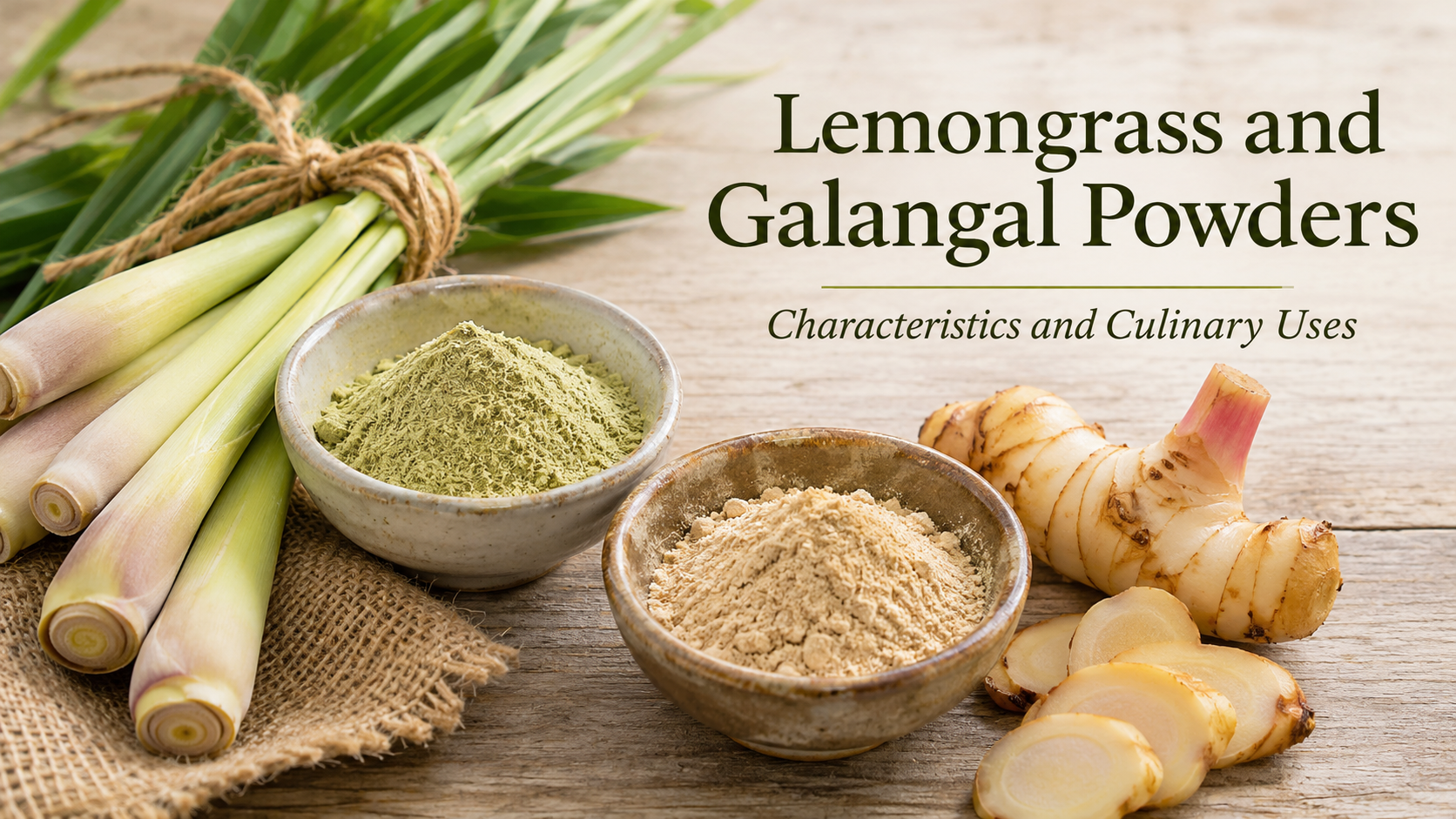
Lemongrass and galangal are two distinctive aromatic ingredients widely associated with Southeast Asian cuisine. Both are used to develop characteristic flavors in soups, curries, savory dishes, and seasoning preparations.
When processed into dried powders, these ingredients offer different possibilities for food manufacturers, distributors, and culinary ingredient buyers.
Understanding the differences between lemongrass powder and galangal powder can help buyers select the right ingredients for specific food applications.
Understanding Lemongrass Powder
Lemongrass, scientifically known as Cymbopogon citratus, is an aromatic tropical grass commonly used in Thai and other Southeast Asian cuisines.
Its stalks and leaves are valued for their distinctive lemon-like fragrance, which comes from naturally occurring aromatic compounds.
Lemongrass powder is produced by drying suitable plant material and grinding it into smaller particles.
The finished powder may vary in color, texture, aroma, and intensity depending on the plant material and processing method.
Aroma and Flavor Characteristics
The most recognizable feature of lemongrass powder is its fresh, citrus-like aroma.
It generally contributes a light, herbal, lemony character without providing the same acidity as lemon juice.
The aromatic profile can vary depending on whether the powder is produced primarily from stalks, leaves, or a combination of suitable plant parts.
Buyers should therefore clarify the raw material used and assess the product’s aroma before selecting it for commercial food applications.
Color and Texture
Depending on the plant parts and processing conditions, lemongrass powder may appear pale green, greenish-yellow, or light brown.
Particle size can also vary. Some products may have a fine texture, while others retain more fibrous particles.
A consistent grind is particularly important when the powder is intended for dry seasoning blends or other applications requiring uniform mixing.
Understanding Galangal Powder
Galangal is an aromatic rhizome used in traditional Southeast Asian cooking.
Greater galangal, scientifically known as Alpinia galanga, belongs to the ginger family, Zingiberaceae.
Although galangal and ginger are botanically related, their characteristic aromas and flavors are different.
Galangal powder is made by drying suitable galangal rhizomes and grinding them into powder.
Aroma and Flavor Characteristics
Galangal has a distinctive warm, spicy, peppery, and aromatic character.
Its flavor can contain woody, earthy, and slightly citrus-like notes, depending on the raw material and processing method.
This makes galangal a recognizable ingredient in traditional Thai soups, curries, and other savory preparations.
Because different plants may be marketed under the name “galangal,” buyers should confirm the botanical identity of the requested product.
Appearance and Powder Characteristics
Galangal powder may range from pale beige to light brown.
Color and particle size depend on the rhizome material, drying conditions, and milling process.
A finely ground powder may be suitable for selected seasoning blends, while coarser products may be used differently depending on the intended formulation.
Buyers should evaluate flavor intensity and texture against their required product specifications.
Lemongrass Powder vs. Galangal Powder: Key Differences
Although both ingredients are used in Southeast Asian cooking, their flavor profiles are not interchangeable.
Lemongrass powder is generally selected for its refreshing citrus-like and herbal character.
Galangal powder contributes a warmer, sharper, and more peppery aromatic profile.
Lemongrass is derived from aromatic grass material, whereas greater galangal powder is obtained from an underground rhizome.
In some food formulations, the two ingredients are combined to create a more complex aromatic profile.
However, the appropriate proportions depend on the intended dish, other ingredients, and desired flavor intensity.
Common Culinary Uses of Lemongrass and Galangal Powders
1. Thai Soups and Broths
Fresh lemongrass and galangal are well-known ingredients in Thai soups such as Tom Yum and Tom Kha.
Powdered forms may be considered in selected dry soup bases or formulated seasoning products.
However, dried powders do not necessarily reproduce the full aroma and texture of freshly prepared ingredients. Formulation trials are important.
2. Curry and Spice Blends
Both powders may be incorporated into selected curry powders and aromatic spice mixtures.
Lemongrass contributes citrus-like herbal notes, while galangal provides warm and spicy characteristics.
Their inclusion should be determined through product development and sensory evaluation.
3. Dry Seasoning Ingredients
Manufacturers may use these powders in savory dry seasoning blends for products such as noodles, snacks, and prepared foods.
The powders can be combined with appropriate ingredients such as chili, garlic, coriander, and pepper.
Uniform particle size can help improve mixing consistency.
4. Seafood and Meat Preparations
Lemongrass and galangal are often associated with aromatic seafood and meat dishes in Southeast Asian cooking.
Suitable dried powders may be considered for marinades, dry rubs, or seasoning formulations where their flavors complement the final product.
5. Ready-to-Cook Food Products
Selected ready-to-cook seasoning mixes and meal preparation products may incorporate lemongrass powder or galangal powder.
The suitability of each powder should be confirmed through formulation trials, especially where consistent flavor and appearance are important.
Quality Considerations for Dried Herb Powders
Commercial ingredient buyers should evaluate several quality characteristics before selecting a dried aromatic powder.
Moisture and Storage Stability
Adequate drying is important for reducing deterioration risks during storage.
Excessive moisture can encourage caking and create conditions that may support unwanted microbial growth.
The required moisture specification should be agreed with the supplier and checked against relevant product standards.
Aroma Retention
The aromatic compounds responsible for the characteristic flavors of lemongrass and galangal can be affected by processing and storage.
Improper drying, excessive heat, prolonged storage, and unsuitable packaging may reduce aroma intensity.
Buyers should request samples when aroma is an important part of the finished food product.
Cleanliness and Food Safety
Powders should be evaluated for cleanliness, foreign matter, and relevant food safety requirements.
Depending on the destination country and intended application, testing may address microbiological criteria, pesticide residues, heavy metals, and other contaminants.
Buyers may request a product specification sheet, Certificate of Analysis (COA), or relevant laboratory documentation where appropriate.
For further guidance, consult the FAO guidance on quality assurance for herb and spice products.
Packaging and Storage Recommendations
Dried aromatic powders should be packed in suitable food-grade materials that provide protection against moisture and contamination.
Clean, dry storage conditions and protection from excessive heat and light can help preserve product characteristics.
Packaging formats may vary according to the intended market, production application, and order requirements.
Shelf life, packaging specifications, and recommended storage conditions should be confirmed with the actual supplier.
Selecting the Right Powder for Food Applications
Before requesting a quotation or sample, buyers should identify their intended application and product requirements.
Important considerations include botanical identity, plant part used, aroma profile, particle size, moisture specification, packaging format, quantity, and destination market.
Samples and product information can help buyers compare potential sourcing options.
For related information, see our article on Thai spice powder sourcing and how YA Corporation approaches international buyer requirements.
Lemongrass and Galangal Powder Sourcing with YA Corporation
YA Corporation Co., Ltd. is a Thailand-based international trading and sourcing company focused primarily on exporting food and agricultural products.
Our principal product interests include dry spice powders, seasoning ingredients, and herb powders, alongside six other product groups.
YA Corporation reviews product sourcing inquiries according to the requirements of each business opportunity.
We welcome inquiries from international buyers seeking to explore potential sourcing options for lemongrass powder, galangal powder, and related dried culinary ingredients.
Product availability, quality characteristics, botanical specifications, documentation, prices, and commercial terms must be confirmed with the relevant suppliers before any commitment.
Contact YA Corporation
If you are interested in lemongrass powder, galangal powder, or other dried culinary ingredients, please share your product requirements, preferred specifications, estimated quantity, packaging preferences, and destination country.
YA Corporation Co., Ltd.
Email : yacorporationthailand@gmail.com , info@yacorporationthailand.com
Website: https://yacorporationthailand.com/
We welcome opportunities to discuss suitable product sourcing and international trading arrangements, subject to supplier availability and applicable requirements.
Comments are closed