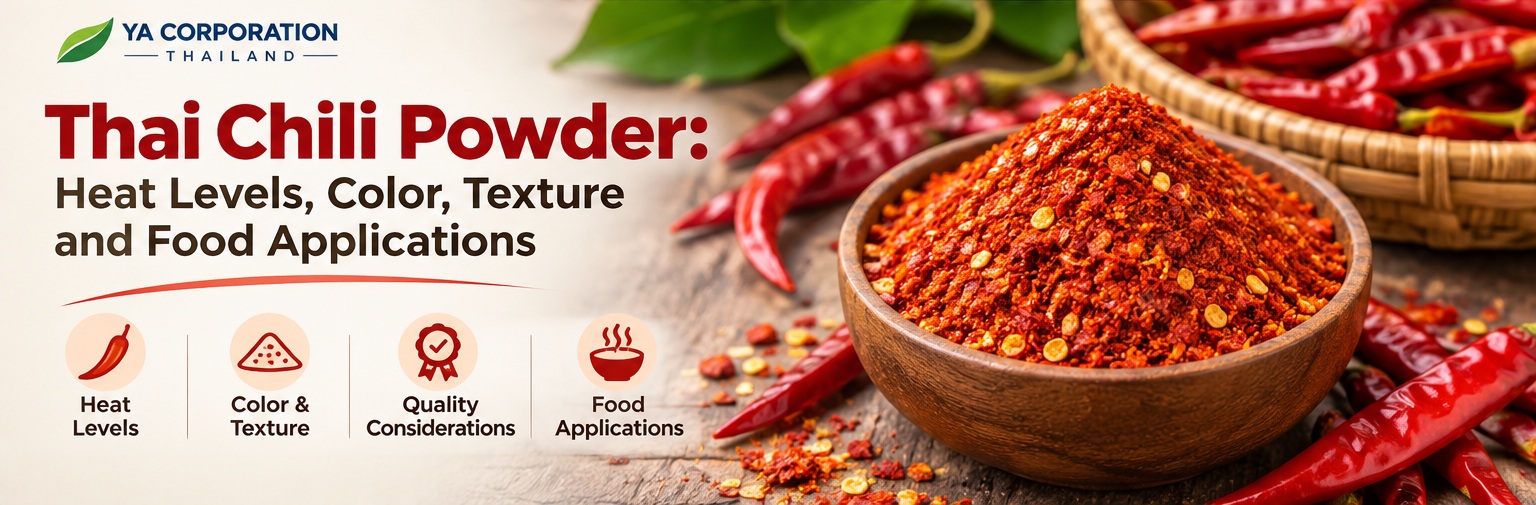
Thai chili powder is a widely used dry seasoning ingredient valued for its characteristic heat, red color, and distinctive chili flavor. It is used in home cooking, foodservice, and a variety of commercially prepared foods.
For international ingredient buyers, understanding Thai chili powder involves more than comparing prices. Different chili varieties, drying conditions, grinding methods, and product specifications can influence how the powder performs in a food application.
This article explains the main characteristics of Thai chili powder and the quality factors that buyers should consider.
What Is Thai Chili Powder?
Thai chili powder is generally produced by drying suitable chili peppers and grinding them into powder.
Chili peppers belong to the Capsicum genus. Different species and varieties can produce noticeably different levels of pungency, aroma, and color.
Products described as chili powder may also differ between markets. Some are made from ground dried chilies alone, while other products are formulated seasoning blends containing additional ingredients.
For this reason, buyers should confirm the ingredient composition rather than rely on the product name alone.
Thai Chili Powder Heat Levels and the Scoville Scale
One of the most important characteristics of chili powder is its pungency, commonly described as heat.
The heating sensation is primarily associated with capsaicinoids, including capsaicin.
Understanding Scoville Heat Units
Scoville Heat Units (SHU) provide a way to express chili pungency.
Higher SHU values generally indicate greater pungency, but an exact value should not be assigned to a product without suitable supporting information.
Thai chili varieties can differ substantially in heat. The final powder may also vary according to the peppers used and the production process.
Food manufacturers seeking consistent results may request a target pungency range supported by appropriate testing.
Natural Color and Appearance
Color is another important consideration when evaluating ground chili products.
Thai chili powder may appear bright red, dark red, or reddish-orange, depending on the chili variety and processing conditions.
Drying, grinding, exposure to light, oxygen, and storage conditions may affect the appearance of chili powder over time.
A bright color alone does not establish product purity, safety, or quality.
Buyers should evaluate color together with the ingredient composition and relevant specifications.
For applications requiring measurable color consistency, appropriate analytical color measurements may be considered.
Texture, Grind Size, and Particle Distribution
Chili powder can be supplied in different textures, from relatively coarse particles to finely ground powder.
The appropriate grind depends on how the ingredient will be used.
Fine Chili Powder
Fine powder may be suitable for dry seasoning mixtures where relatively uniform distribution is important.
Coarse Chili Powder
Coarser material can provide more visible chili particles and a different mouthfeel or visual appearance.
Chili Flakes and Crushed Chili
Although related to powdered chili, flakes and crushed chili are separate product styles.
The Codex Alimentarius standard for dried or dehydrated chili pepper and paprika recognizes whole, crushed, and ground product forms.
Buyers should specify the desired texture or particle-size requirements to avoid confusion between these forms.
Common Food Applications of Thai Chili Powder
Thai chili powder may be used in a variety of food preparations and dry ingredient formulations.
Common applications include:
- Dry seasoning blends: Adding heat and characteristic chili flavor to blended seasonings.
- Snack seasonings: Providing pungency and red color in suitable snack-coating formulations.
- Instant noodle seasonings: Contributing spicy flavor to dry seasoning sachets.
- Spice rubs: Supporting flavor development in meat, poultry, or seafood preparation.
- Culinary dishes: Adding heat to soups, stir-fries, and other prepared foods.
Different applications may require different pungency levels, grind sizes, and sensory characteristics.
Therefore, a chili powder suitable for one product formulation may not be appropriate for another.
Important Quality Considerations for Chili Powder
For commercial ingredient sourcing, buyers should review the characteristics of the product before making purchasing decisions.
Important factors include moisture content, product identity, cleanliness, physical defects, and applicable food safety requirements.
Food manufacturers may also request information about microbiological criteria, pesticide residues, mycotoxins, and other relevant contaminants.
The required tests depend on the product, its intended application, and the destination market.
International buyers can consult the Codex Alimentarius food standards, including Standard CXS 353-2022 for dried or dehydrated chili pepper and paprika.
These standards provide useful references for product characteristics, hygiene, and labeling, but applicable national regulations must also be checked.
A Certificate of Analysis (COA) or other supporting laboratory documentation may be requested where relevant.
Packaging and Storage Considerations
Because chili powder is a dried ingredient, suitable packaging and storage help protect it from moisture, contamination, and undesirable changes during handling.
Buyers should confirm the packaging material, net weight, labeling, shelf life, and recommended storage conditions.
Appropriate packaging may also help reduce exposure to light and oxygen, depending on the product specification.
The required packaging format should be agreed with the relevant supplier.
What Should Ingredient Buyers Ask Before Sourcing?
Before requesting a commercial quotation, buyers should prepare clear product requirements.
These may include:
- Chili variety or required product characteristics
- Pure ground chili or a formulated seasoning blend
- Target pungency or SHU range, where applicable
- Desired color and grind size
- Moisture and food safety requirements
- Packaging, quantity, and intended market
Clear specifications help buyers and suppliers compare products using relevant criteria.
Thai Chili Powder Sourcing Through YA Corporation
YA Corporation Co., Ltd. is a Thailand-based trading and sourcing company primarily focused on international exports of food and agricultural products.
Dry spice powders, seasoning ingredients, and herb powders are among our principal product categories.
YA Corporation welcomes chili powder sourcing inquiries based on buyer requirements, product availability, and agreed commercial conditions.
We are not the manufacturer of the products discussed in this article. Product availability, specifications, laboratory documentation, and commercial terms must be confirmed with the relevant supplier.
For more information about our approach, read Thai Spice Powder Sourcing: How YA Corporation Works with International Buyers.
Contact YA Corporation
International buyers interested in Thai chili powder or other dry seasoning ingredients are welcome to submit product inquiries.
Please include the required specifications, quantity, packaging, and destination country.
YA Corporation Co., Ltd.
Email: yacorporationthailand@gmail.com
Website: https://yacorporationthailand.com/
Product availability, specifications, certifications, and commercial arrangements are subject to supplier confirmation and applicable requirements.
Comments are closed