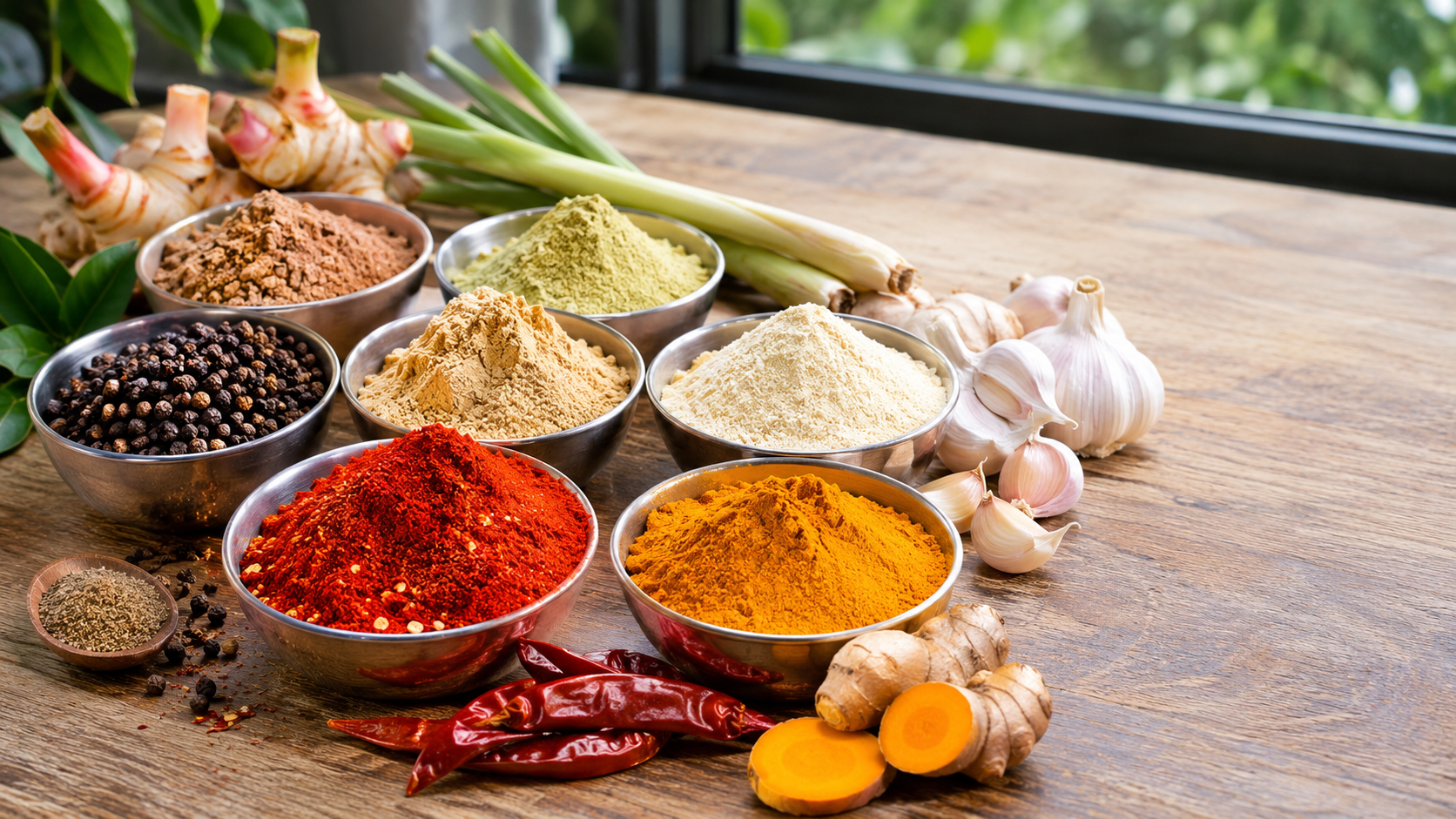
International food manufacturers, importers, distributors, and ingredient buyers often look for dried spices and seasoning powders that match specific product applications. Choosing suitable ingredients requires more than comparing prices. Aroma, color, particle size, composition, packaging, and food safety requirements can all influence purchasing decisions.
YA Corporation Co., Ltd. is a Thailand-based trading and sourcing company focusing primarily on international exports of food and agricultural products. Dry spices, seasoning ingredients, and herb powders are among our principal product categories.
Through international trading and product sourcing, we aim to help buyers explore suitable products according to their requirements and availability.
Thai Seasoning Powder Sourcing: What B2B Buyers Should Know
Thai seasoning powder sourcing involves identifying dried ingredients that meet a buyer’s intended application, quality expectations, and commercial requirements.
Food manufacturers may require finely ground powders for consistent blending, while foodservice suppliers may prefer coarser textures or distinctive flavor profiles.
Importers and distributors may also consider product origin, available packaging formats, minimum order quantities, and applicable market requirements.
Before selecting a product, buyers should clearly define the intended use and the specifications they expect suppliers to meet.
Understanding Spices, Seasoning Powders, and Herb Ingredients
Although these product groups are related, they are not always interchangeable.
1. Spice Powders
Spice powders are produced by grinding dried plant materials used primarily to provide flavor, aroma, color, or pungency.
Examples include:
- Chili powder
- Black pepper powder
- White pepper powder
- Turmeric powder
- Ginger powder
- Coriander powder
Each spice has distinctive characteristics that may affect its suitability for different food applications.
2. Dry Seasoning Powders
Dry seasoning powders are used to enhance or develop the flavor of prepared foods.
Depending on the formulation, they may contain individual seasoning ingredients or blends of several ingredients.
Common applications include snack seasoning, processed foods, instant food products, marinades, and foodservice preparations.
The composition of a seasoning blend should always be confirmed before purchase. Buyers should not assume that every seasoning powder contains the same ingredients or is free from additives or allergens.
YA Corporation focuses on dry seasoning ingredients rather than liquid sauces or ready-to-use liquid seasonings.
3. Culinary Herb and Aromatic Powders
Dried culinary herbs and aromatic plant powders provide characteristic flavors and fragrances.
Products that may be considered for sourcing include:
- Lemongrass powder
- Galangal powder
- Garlic powder
- Onion powder
- Selected culinary herb powders
These ingredients can be used individually or incorporated into food formulations.
Their suitability depends on the product specification, processing method, and intended application.
Seven Essential Checks for Thai Seasoning Powder Sourcing
For international buyers, a structured product assessment can help reduce misunderstandings and improve purchasing decisions.
1. Ingredient Identity
Confirm the correct product name, botanical identity where relevant, and whether the powder contains a single ingredient or a blend.
2. Aroma and Flavor
Different origins, varieties, and processing methods may produce different sensory characteristics. Buyers should define the flavor or aroma profile required for their products.
3. Particle Size
Fine and coarse powders behave differently during mixing, seasoning, and food preparation. Buyers may specify a mesh size or other measurable particle-size requirement.
4. Moisture and Storage Stability
Moisture control is important for maintaining the condition of dried ingredients. Appropriate specifications and storage conditions should be agreed upon with the supplier.
5. Food Safety Requirements
Depending on the product and destination market, relevant checks may include microbiological criteria, pesticide residues, mycotoxins, heavy metals, and permitted additives.
6. Packaging Requirements
Buyers should identify appropriate packaging materials, net weights, labeling information, and protection against moisture or contamination.
7. Documentation and Traceability
Where applicable, request product specification sheets, lot identification, Certificates of Analysis, laboratory reports, and supporting certificates.
Document availability and validity must be verified with the supplier.
These checks provide a practical starting point for Thai seasoning powder sourcing, although the final requirements depend on the individual product and market.
Quality and Food Safety Considerations
Food safety is an important consideration when purchasing dried spices and culinary herbs.
Even low-moisture ingredients require appropriate handling, processing, storage, and protection from contamination.
The Codex Alimentarius standards for spices and culinary herbs provide internationally recognized references that buyers and suppliers can consult.
Importers should also verify applicable requirements in their destination markets.
For example, the CBI guide to European buyer requirements for herbs and spices explains important food safety considerations and additional buyer expectations.
These references support product evaluation but do not replace destination-specific legal requirements or individual supplier verification.
How YA Corporation Supports B2B Ingredient Sourcing
YA Corporation operates as a trading and sourcing company rather than a manufacturer.
We review buyer requirements and explore suitable ingredient sourcing options.
Product availability, pricing, specifications, payment terms, and delivery conditions are reviewed for each transaction.
Our approach includes coordinating product specifications and commercial information to support purchasing decisions.
Our sourcing scope includes dry spices, seasoning powders, and herb ingredients, alongside six other product groups: fresh fruits, fresh vegetables, nuts and seeds, chilled and frozen meat, fresh/chilled/frozen seafood and aquatic products, and other selected products.
For additional context about our sourcing approach, read Thai Spice Powder Sourcing: How YA Corporation Works with International Buyers.
International Export Focus and Import Opportunities
YA Corporation’s primary commercial direction is international export trading.
The company is also preparing to explore import opportunities involving food and agricultural products, subject to supplier availability, applicable regulations, and commercial feasibility.
Import-related inquiries may be considered individually, including possible supply to customers in Thailand or subsequent international trading arrangements.
Request a Thai Spice or Seasoning Powder Sourcing Inquiry
If your business is looking for Thai spice powders, dry seasoning ingredients, or culinary herb powders, YA Corporation welcomes product sourcing inquiries.
Please provide the product name, intended application, preferred specifications, target quantity, packaging requirements, destination country, and any required certifications or laboratory documents.
This information helps us review potential sourcing options and communicate more effectively with relevant suppliers.
Contact YA Corporation Co., Ltd.
Email: yacorporationthailand@gmail.com
Website: https://yacorporationthailand.com/
All product availability, specifications, pricing, documentation, and commercial arrangements are subject to confirmation. YA Corporation does not claim to manufacture the products described in this article.
Comments are closed