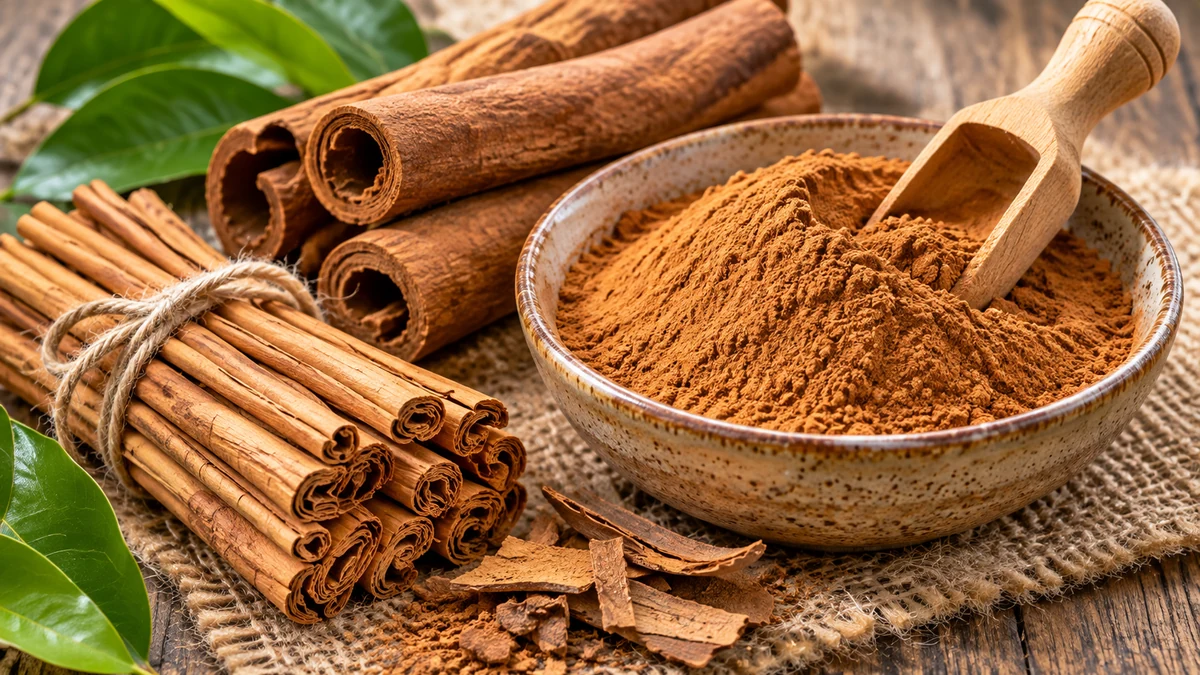
Cinnamon powder is a popular culinary spice recognized for its warm aroma, distinctive flavor, and versatility in food preparation. It is widely used in bakery products, beverages, confectionery, seasoning blends, and various savory dishes.
However, not all cinnamon powders are identical. Different cinnamon species can have different aromas, flavor intensities, chemical compositions, and quality characteristics.
Understanding cinnamon powder types is important for international buyers, food manufacturers, and distributors when selecting suitable ingredients for specific food applications.
This article explores the major types of cinnamon powder, their characteristics, important quality considerations, and common culinary uses.
1. What Is Cinnamon Powder?
Cinnamon powder is produced by grinding dried cinnamon bark into a fine or relatively coarse powder.
Cinnamon comes from trees belonging to the Cinnamomum genus.
The bark is harvested, dried, and processed into different commercial forms, including sticks, pieces, and powder.
Processing methods and raw material characteristics can influence the finished product’s appearance, aroma, and texture.
Buyers should identify the required cinnamon type and product specifications rather than relying only on the general description “cinnamon powder.”
2. Understanding Different Cinnamon Powder Types
Two major commercial categories are Ceylon cinnamon and Cassia cinnamon.
Ceylon Cinnamon
Ceylon cinnamon, commonly called true cinnamon, is primarily associated with Cinnamomum verum, also known as Cinnamomum zeylanicum.
It is traditionally associated with Sri Lanka and is generally described as having a relatively delicate, mild, and subtly sweet aromatic profile.
Ceylon cinnamon bark often forms thin, layered quills.
Its flavor characteristics may be suitable for food products requiring a gentler cinnamon profile.
Cassia Cinnamon
Cassia refers to several commercially important cinnamon species.
These include Chinese cassia (Cinnamomum cassia), Indonesian cinnamon (Cinnamomum burmannii), and Vietnamese cinnamon (Cinnamomum loureiroi).
Cassia varieties generally have a stronger, more intense flavor profile than Ceylon cinnamon, although characteristics vary between species and individual products.
Cassia cinnamon is commonly used in spice blends, baked goods, beverages, and other food products.
Why Cinnamon Type Matters
Different cinnamon types should not automatically be considered interchangeable.
Buyers may need to evaluate botanical identity, aroma, flavor, composition, and applicable food safety requirements before choosing an ingredient.
3. Cinnamon Powder Aroma and Flavor Characteristics
The characteristic aroma of cinnamon is associated with naturally occurring volatile compounds, particularly cinnamaldehyde.
The proportion of aromatic compounds can vary depending on cinnamon species, growing conditions, processing, and storage.
Cinnamon is commonly described as warm, sweet, woody, and spicy.
Some products have a relatively mild aroma, while others provide a stronger and sharper sensory profile.
Food manufacturers should evaluate samples against their intended product formulations.
A stronger aroma does not necessarily indicate higher quality because different applications require different flavor characteristics.
4. Cinnamon Powder Quality Considerations
Product quality should be evaluated through agreed specifications and appropriate supplier documentation.
Color and Appearance
Cinnamon powder commonly appears in shades ranging from light brown to reddish brown.
Color can vary depending on species, processing, and raw material characteristics.
Appearance alone cannot reliably establish botanical identity or purity.
Moisture Content
Moisture is an important consideration for dried spices.
Inappropriate storage or excessive moisture absorption can cause caking and changes in product condition.
The required moisture specification should be established according to the product and applicable quality requirements.
Particle Size
Cinnamon powder is available in different grind sizes.
Fine powders may be suitable for certain bakery and dry-mix applications, while other formulations may require different particle characteristics.
Buyers should confirm the required grind size or sieve specification.
Purity and Authenticity
Cinnamon powder should be evaluated for correct botanical identity, declared composition, and potential contamination or adulteration.
Because different cinnamon species can look similar when ground, visual inspection alone is insufficient for confirming authenticity.
Appropriate laboratory analysis may be necessary where identity or composition requires verification.
5. Coumarin and Cinnamon Type Selection
Coumarin is a naturally occurring compound found in cinnamon, with concentrations that can differ substantially between species.
Cassia cinnamon generally contains more coumarin than Ceylon cinnamon.
According to the German Federal Institute for Risk Assessment (BfR), high and prolonged exposure to coumarin may pose health concerns, particularly for sensitive individuals.
For food manufacturers, the relevant considerations depend on cinnamon type, intended use, consumption patterns, and destination-market requirements.
Buyers should confirm the botanical species and evaluate any necessary composition or testing requirements.
Further information is available from the German Federal Institute for Risk Assessment.
6. Common Culinary Uses of Cinnamon Powder
Cinnamon powder is used across a wide range of food categories.
Bakery Products
Cinnamon is commonly incorporated into cakes, cookies, pastries, breads, and sweet bakery fillings.
Its warm aroma complements many baked products.
Beverages
Cinnamon powder may be used in selected tea blends, flavored beverages, and instant drink formulations.
Manufacturers should evaluate flavor intensity and powder dispersion in the intended beverage system.
Confectionery
Chocolate products, sweets, and certain confectionery formulations may use cinnamon for its characteristic aromatic properties.
Seasoning Blends
Cinnamon can be combined with other dry spices to develop distinctive seasoning profiles.
The appropriate combination depends on the food product and desired flavor.
Savory Foods
Cinnamon is also used in selected meat dishes, rice preparations, curries, and other savory foods.
Its usage level should be determined through formulation testing and sensory evaluation.
7. Cinnamon Powder Storage and Packaging
Proper packaging and storage help preserve the quality of dry cinnamon powder.
The product should be protected from moisture, contamination, excessive heat, and unsuitable storage conditions.
Depending on the supplier and buyer requirements, packaging may include sealed food-grade pouches, bags, or suitable bulk packaging.
Buyers should confirm packaging specifications, storage recommendations, and supported shelf-life information before purchasing.
No particular shelf life should be assumed without product-specific information.
8. Cinnamon Powder Specifications for International Buyers
International importers and food manufacturers should consider requesting the following information:
- Product name and botanical species
- Country of origin and processing information
- Aroma, flavor, and appearance specifications
- Moisture requirements
- Particle size or grind specification
- Ingredient purity and composition
- Relevant contaminant and microbiological criteria
- Packaging and storage requirements
Where relevant, buyers may also request a product specification sheet, Certificate of Analysis (COA), or supporting laboratory documentation.
The ISO 6539:2014 cinnamon specification provides reference requirements for Ceylon-type cinnamon, including whole and powdered forms.
For Cassia varieties, the ISO 6538 specification provides a separate reference.
Applicable regulations and customer requirements should always be verified for the destination market.
9. Cinnamon Powder Sourcing with YA Corporation
YA Corporation Co., Ltd. is a Thailand-based trading and sourcing company focusing primarily on international exports of food and agricultural products.
The company’s main product focus includes spice powders, dry seasoning ingredients, and herb powders.
Its broader product scope also includes fresh fruits, fresh vegetables, nuts and seeds, chilled and frozen meat, seafood and aquatic products, and other products considered individually.
YA Corporation operates as a trading and sourcing company rather than manufacturing the products discussed in this article.
The company reviews buyer requirements, explores suitable sourcing options, and coordinates product and commercial information.
While international exports remain the primary business focus, suitable import-related inquiries may also be considered according to operational readiness and product requirements.
All cinnamon powder types, quality specifications, product availability, packaging options, and commercial terms are subject to supplier confirmation.
10. Contact YA Corporation Co., Ltd.
International importers, distributors, and food manufacturers interested in cinnamon powder, other spice powders, seasoning ingredients, and herb powders are welcome to submit product inquiries.
Please provide the preferred cinnamon type, specifications, intended applications, estimated quantity, packaging requirements, and destination country.
Email : yacorporationthailand@gmail.com , info@yacorporationthailand.com
Website: https://yacorporationthailand.com/
For more information about sourcing dry ingredients, read Thai Spice Powder Sourcing.
All product types, specifications, availability, prices, quality documents, testing results, packaging options, and commercial arrangements are subject to supplier verification, applicable regulations, and mutual agreement.
Comments are closed