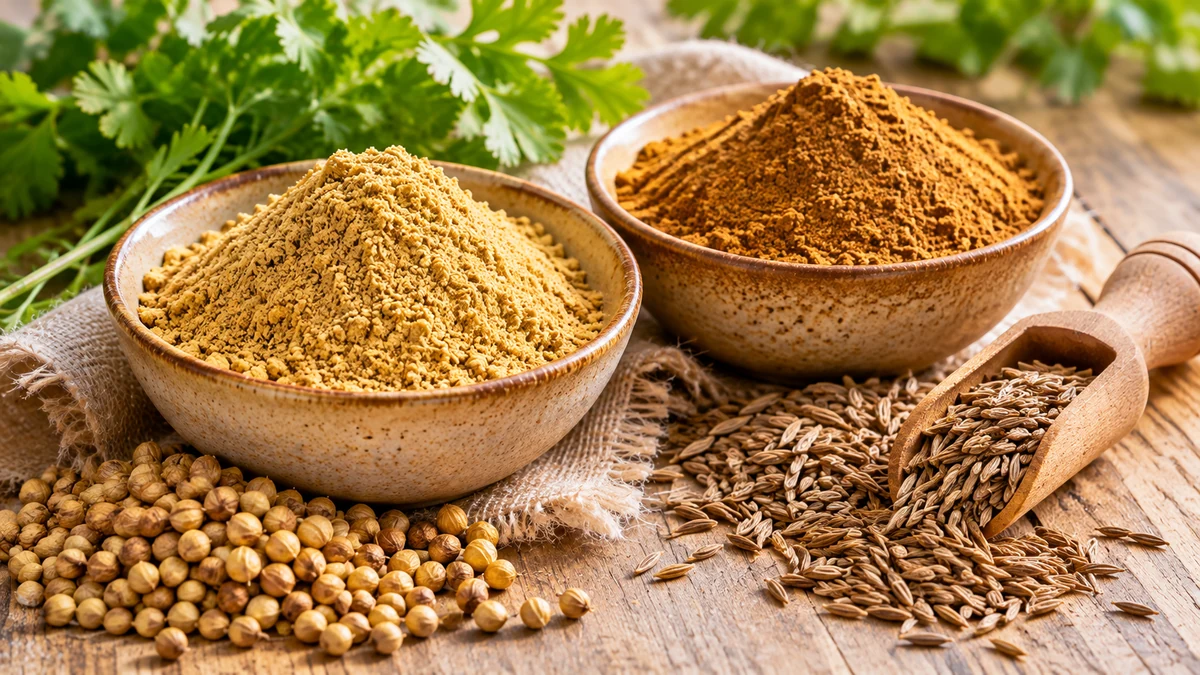
Coriander and cumin powders are widely used dry spices valued for their distinctive aromas, flavors, and versatility in food preparation. Both ingredients are commonly found in curry powders, seasoning blends, marinades, soups, and savory food formulations.
Although coriander and cumin are frequently used together, they come from different plants and offer noticeably different sensory characteristics.
For international importers, distributors, and food manufacturers, understanding these differences is important when selecting suitable ingredients and evaluating product quality.
This article explores the flavor profiles, physical characteristics, quality considerations, and culinary applications of coriander and cumin powders.
1. What Are Coriander and Cumin Powders?
Coriander powder is produced by grinding the dried mature fruits, commonly called seeds, of Coriandrum sativum L.
These seeds are generally round and have a characteristic aromatic profile that differs from fresh coriander leaves.
Cumin powder is produced by grinding the dried fruits of Cuminum cyminum L.
Cumin seeds are elongated and ridged, with a distinctive warm and earthy aroma.
Both spices may be supplied as whole seeds or ground powders.
The grinding process makes them convenient for use in dry food formulations, although particle size and processing conditions can affect their characteristics.
2. Coriander Powder: Aroma and Flavor Profile
Coriander powder is often described as having a warm, mild, slightly citrus-like, and subtly sweet flavor.
The aromatic profile of coriander seeds is associated with naturally occurring volatile compounds, including linalool.
Linalool contributes significantly to the characteristic aroma of coriander seed essential oil.
However, aroma intensity can vary according to raw material variety, origin, processing, and storage conditions.
Common Characteristics of Coriander Powder
- Mild and warm aromatic profile
- Slightly citrus-like flavor notes
- Light brown to yellowish-brown appearance
- Fine or coarse powder texture
- Versatility in seasoning formulations
Coriander powder is commonly used to complement other spices without necessarily dominating the overall flavor of a recipe.
Its sensory profile should be evaluated using representative product samples.
3. Cumin Powder: Aroma and Flavor Profile
Cumin powder is recognized for its strong, earthy, warm, and slightly bitter flavor characteristics.
Its aroma is more assertive than that of coriander powder in many culinary applications.
Naturally occurring volatile compounds, including cuminaldehyde, contribute to cumin’s characteristic aroma.
The composition and intensity of these compounds may vary depending on the raw material and processing conditions.
Common Characteristics of Cumin Powder
- Strong, warm, earthy aroma
- Distinctive savory flavor
- Brown to yellowish-brown appearance
- Fine or coarse ground texture
- Common use in strongly flavored seasoning blends
Cumin powder can contribute substantial flavor intensity even when used in relatively small proportions.
However, the appropriate quantity depends on the overall food formulation and desired sensory characteristics.
4. Coriander vs. Cumin: Important Differences
Although both spices are used in similar food categories, their flavor profiles are not identical.
Botanical Identity
Coriander comes from Coriandrum sativum, while cumin comes from Cuminum cyminum.
Aroma
Coriander generally provides a milder, somewhat citrus-like aromatic character.
Cumin typically offers a more pronounced earthy and warm aroma.
Flavor Intensity
Cumin often has a stronger and more distinctive savory flavor, while coriander may provide a gentler aromatic background.
Food Applications
Both ingredients are used in curries, dry seasonings, spice blends, and other savory products.
However, they contribute different sensory characteristics and should not automatically be substituted for one another at equal quantities.
Food manufacturers should evaluate their performance in the intended formulation.
5. Common Culinary Uses of Coriander Powder
Coriander powder is widely used in several culinary applications.
Curry Powders and Spice Blends
Coriander is a common component of curry powders and mixed seasoning formulations.
It may be combined with cumin, turmeric, chili powder, ginger powder, or other suitable dry spices.
Savory Food Preparation
Coriander powder may be incorporated into soups, stews, rice dishes, vegetable preparations, and selected meat-based recipes.
Its warm and mild aromatic characteristics can support balanced seasoning profiles.
Marinades and Dry Rubs
Coriander powder is also used in dry spice rubs and marinade formulations.
The amount required depends on the desired flavor and the other ingredients in the formulation.
6. Common Culinary Uses of Cumin Powder
Cumin powder is commonly associated with richly flavored savory dishes.
Curry and Seasoning Formulations
Cumin is frequently included in curry powders and seasoning blends for its characteristic earthy flavor.
Meat and Vegetable Dishes
Cumin may be used in meat seasonings, roasted vegetable dishes, rice preparations, and other savory applications.
Snacks and Prepared Foods
Food manufacturers may use cumin powder in selected snack seasonings and prepared food formulations.
Because cumin can have a distinctive flavor intensity, manufacturers should conduct appropriate formulation trials before confirming the desired quantity.
7. Quality Considerations for Coriander and Cumin Powders
International buyers should evaluate more than aroma and flavor when sourcing dry spices.
Color and Appearance
Color can vary according to raw material characteristics and processing methods.
A consistent appearance may be important for some food applications, but color alone cannot establish product purity or safety.
Moisture Content
Excessive moisture absorption can affect the condition of ground spices.
Buyers should establish suitable moisture requirements based on the particular product and applicable specifications.
Particle Size
Particle size can influence mixing, handling, and the appearance of a finished food product.
Buyers may request fine or coarse powder according to their processing requirements.
Purity and Contaminants
Product evaluation may include botanical identity, ingredient composition, foreign matter, microbiological criteria, pesticide residues, and other applicable contaminants.
The relevant requirements depend on the spice and destination market.
8. Packaging, Storage and Product Specifications
Suitable packaging helps protect dry spice powders during storage and transportation.
Coriander and cumin powders should be protected from moisture, contamination, and unsuitable environmental conditions.
Depending on supplier capabilities, products may be packed in sealed food-grade pouches, bags, or appropriate bulk packaging.
International buyers should consider requesting:
- Product name and botanical identity
- Country of origin
- Appearance, aroma, and flavor specifications
- Moisture requirements
- Particle size or grind specification
- Ingredient composition and relevant testing information
- Packaging and storage requirements
- Available supporting documents
Buyers can consult the ISO specification for coriander and the ISO specification for cumin as reference information.
The Codex Alimentarius standards database also includes the 2026 standard for dried coriander seeds, including ground forms.
Applicable destination-market requirements should be checked separately.
9. Coriander and Cumin Powder Sourcing with YA Corporation
YA Corporation Co., Ltd. is a Thailand-based trading and sourcing company focusing primarily on international exports of food and agricultural products.
Its main product focus includes spice powders, dry seasoning ingredients, and herb powders.
Coriander and cumin powders are examples of dry spice ingredients that may be considered for sourcing inquiries, subject to supplier availability and product specifications.
YA Corporation operates as a trading and sourcing company rather than manufacturing the products described in this article.
The company reviews buyer requirements, explores suitable sourcing options, and coordinates product and commercial information.
The company’s broader sourcing scope covers seven product groups, including fresh fruits, fresh vegetables, nuts and seeds, spices and herb powders, chilled and frozen meat, seafood and aquatic products, and other products considered individually.
International exports remain the primary business focus. Suitable import-related inquiries may also be considered according to product requirements and operational readiness.
No product availability, quality certification, or commercial condition should be assumed before confirmation.
10. Contact YA Corporation Co., Ltd.
International importers, distributors, and food manufacturers interested in coriander powder, cumin powder, or other dry spice and herb ingredients are welcome to submit their product inquiries.
Please include your required specifications, preferred grind size, estimated quantity, packaging requirements, intended applications, and destination country.
Email : yacorporationthailand@gmail.com , info@yacorporationthailand.com
Website: https://yacorporationthailand.com/
For additional information about our sourcing approach, read Thai Spice Powder Sourcing.
All product specifications, origin information, availability, pricing, packaging options, quality documents, and commercial arrangements are subject to supplier confirmation, applicable requirements, and mutual agreement.
Comments are closed