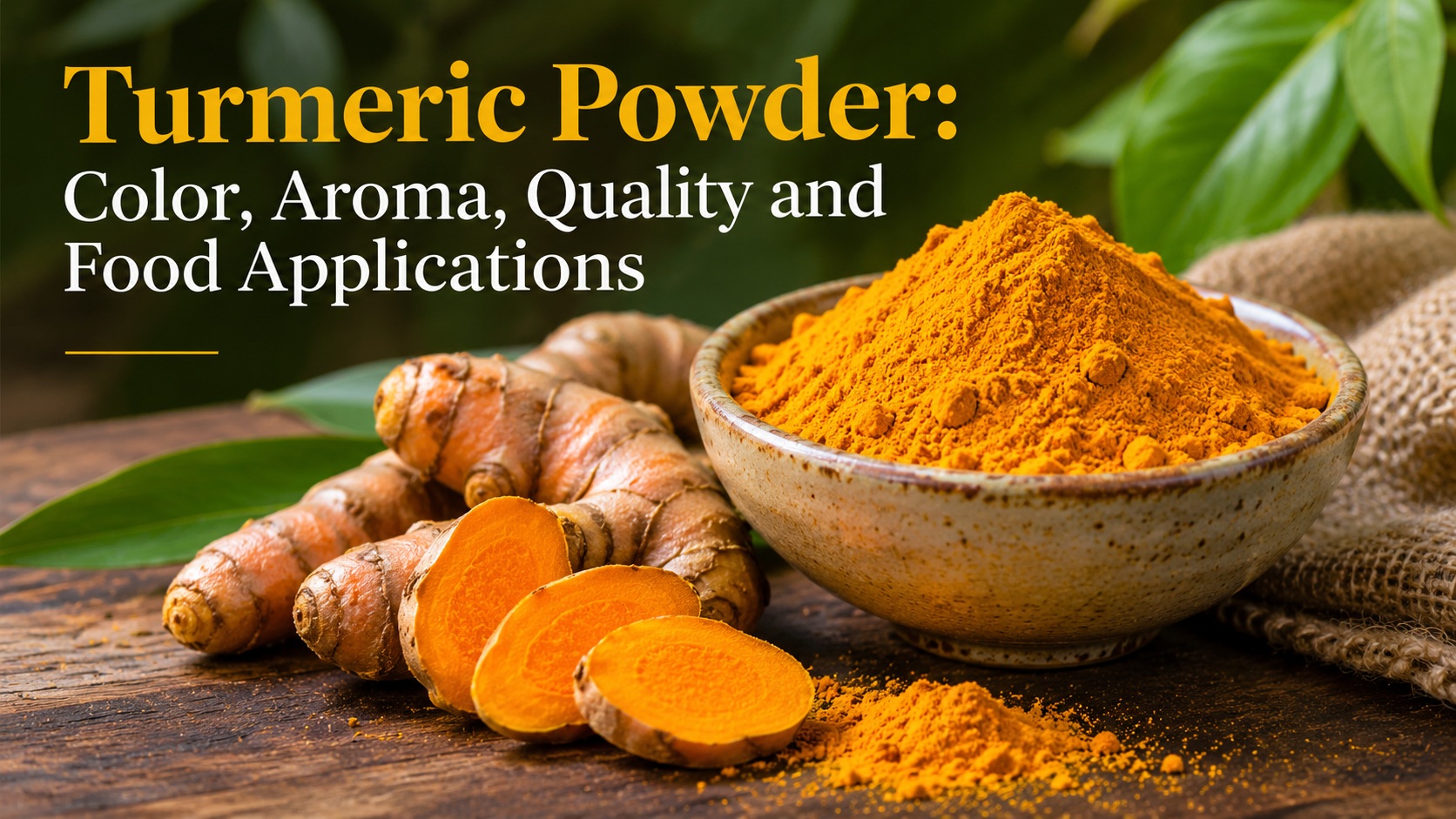
Turmeric powder is a widely used culinary ingredient valued for its distinctive golden-yellow color, earthy aroma, and versatility in food preparation. Understanding turmeric powder quality is important for food manufacturers, ingredient distributors, and international buyers who require suitable characteristics for their products.
Produced from the dried rhizomes of Curcuma longa L., turmeric powder is commonly used in curries, dry seasoning blends, savory foods, and prepared food products. However, its color, flavor, particle size, and other characteristics can differ depending on the raw material and processing conditions.
For buyers evaluating turmeric powder, selecting a suitable product involves more than comparing color and price.
Understanding Turmeric Powder: Origin and Characteristics
Turmeric belongs to the ginger family, Zingiberaceae. Its underground rhizomes are harvested and processed into different commercial forms, including whole dried turmeric, cut pieces, and ground powder.
During preparation, turmeric rhizomes are typically cleaned, subjected to appropriate processing, dried, and ground into powder. The processing method can influence the final product’s appearance, aroma, texture, and storage characteristics.
The resulting powder may range from yellow to deeper orange-yellow, depending on the turmeric variety, growing conditions, and processing methods.
Color: The Distinctive Golden-Yellow Appearance
One of turmeric powder’s most recognizable characteristics is its natural yellow-orange color.
This appearance is associated with pigments known as curcuminoids, including curcumin. These compounds contribute to turmeric’s characteristic coloring properties.
Color is particularly important when turmeric powder is used in food formulations where a consistent visual appearance is desired.
Nevertheless, a brighter color does not automatically indicate better turmeric powder quality. Buyers should evaluate the product against defined specifications rather than relying on visual appearance alone.
Aroma and Flavor Characteristics
Turmeric powder generally has an earthy, warm, slightly woody aroma, with a characteristic taste that may include mildly bitter notes.
Aroma and flavor can vary according to the source material, drying process, storage conditions, and age of the product.
For food manufacturers, these differences matter because turmeric may be used alongside other spices in formulations requiring a consistent flavor profile.
Samples should therefore be evaluated for their intended culinary application before a commercial specification is finalized.
Turmeric Powder Quality: Essential Evaluation Factors
Evaluating turmeric powder quality requires consideration of physical characteristics, chemical parameters, cleanliness, and food safety.
Moisture Content and Storage Stability
Moisture content is an important quality parameter for dried spices.
Excessive moisture can contribute to deterioration, caking, and conditions that may encourage microbial growth during unsuitable storage.
The Codex Alimentarius standard CXS 359-2024 specifies a maximum moisture content of 10% by weight for powdered or ground turmeric.
This serves as a useful international reference, although buyers must also confirm the applicable destination-market regulations and contractual requirements.
Curcuminoid Content and Coloring Characteristics
Curcuminoid content is another parameter relevant to turmeric powder evaluation.
Under Codex CXS 359-2024, the minimum curcuminoid content for ground turmeric is 2% by weight on a dry basis.
The same standard also specifies limits for total ash and acid-insoluble ash, which are relevant chemical quality characteristics.
Buyers requiring particular coloring performance should request appropriate specifications and analytical information from the supplier rather than assuming that all turmeric powders perform identically.
Particle Size and Powder Texture
Turmeric powder can be produced with different degrees of fineness.
A finer powder may disperse differently from a coarser grind during mixing and food preparation. The desired particle size depends on the intended application and processing method.
Food manufacturers should clarify whether they require a particular mesh size, particle-size range, or other measurable characteristic.
Samples can help buyers assess the powder’s suitability for blending, mixing, and finished-product appearance.
Purity, Safety, and Supporting Documents
Turmeric powder should be evaluated for potential contamination, undeclared additions, and other food safety concerns.
Depending on the product and destination market, buyers may need to consider microbiological criteria, pesticide residues, heavy metals, and relevant contaminants.
Concerns about adulteration also make identity and authenticity important. Visual appearance alone cannot establish that a powder is free from unauthorized coloring agents or substitute ingredients.
Depending on the purchase requirements, buyers may request product specifications, laboratory results, or a Certificate of Analysis (COA).
For an internationally recognized reference, consult the Codex Alimentarius food standards, including CXS 359-2024 for dried or dehydrated turmeric.
Common Food Applications of Turmeric Powder
Turmeric powder is valued in a range of culinary preparations. Its suitability depends on the desired appearance, taste, and formulation.
1. Curry Dishes and Spice-Based Recipes
Turmeric is commonly used in curry preparations and spice mixtures. It contributes characteristic color and earthy flavor that complement other ingredients.
2. Rice and Noodle Preparations
Turmeric powder can be incorporated into selected rice dishes and savory noodle preparations to provide a golden appearance and characteristic flavor.
3. Dry Seasoning Blends
Dry seasoning manufacturers may combine turmeric with garlic powder, chili powder, pepper, coriander, and other ingredients.
The appropriate inclusion rate depends on the desired finished-product profile.
4. Soup Bases and Savory Food Formulations
Turmeric can be included in selected soup-base powders and other savory food formulations where its color and flavor characteristics are suitable.
5. Snack Seasonings and Food Coatings
Turmeric may also be used in dry seasoning mixtures for savory snacks and coated food products.
Consistent powder characteristics can be important for even distribution and appearance.
Packaging and Storage Considerations
Proper packaging helps protect turmeric powder from environmental conditions that may affect its quality.
Buyers should consider packaging materials that provide suitable protection against moisture, contamination, and excessive light exposure.
Storage in clean, dry conditions away from excessive heat is generally advisable.
Packaging size and format should reflect the intended use, whether for food manufacturing, distribution, or further repackaging.
Shelf life should not be assumed from appearance alone. Buyers should obtain the relevant supplier’s shelf-life information and confirm the recommended storage conditions.
Selecting Turmeric Powder for Commercial Applications
Before placing an inquiry, buyers should prepare a clear description of their requirements.
Important information includes:
- Intended food application and preferred flavor characteristics.
- Required color, texture, and particle size.
- Moisture and curcuminoid specifications, where relevant.
- Required quantity and packaging format.
- Destination country and applicable quality requirements.
- Sampling, laboratory testing, and supporting documentation needs.
A clear product specification helps suppliers evaluate whether a proposed product is suitable.
For commercial purchasing, turmeric powder quality should be assessed against agreed requirements, verified product information, and the needs of the final application.
Turmeric Powder Sourcing with YA Corporation
YA Corporation Co., Ltd. is a Thailand-based international trading and sourcing company with a primary focus on food and agricultural product exports.
Our main product focus includes dry spice powders, seasoning ingredients, and herb powders, including turmeric powder, alongside six other product groups.
YA Corporation reviews product sourcing inquiries according to the requirements of each business opportunity.
We welcome inquiries from international buyers seeking to explore potential turmeric powder sourcing options. Product availability, origin, specifications, packaging, supporting documents, and commercial terms must be confirmed with the relevant suppliers before any commitment.
Contact YA Corporation
If you are interested in turmeric powder or other dry spice and herb powder ingredients, please share your product requirements, expected quantity, packaging preferences, and destination country.
YA Corporation Co., Ltd.
Email : yacorporationthailand@gmail.com , info@yacorporationthailand.com
Website: https://yacorporationthailand.com/
We welcome opportunities to discuss suitable product sourcing and trading arrangements, subject to supplier availability and applicable requirements.
Comments are closed