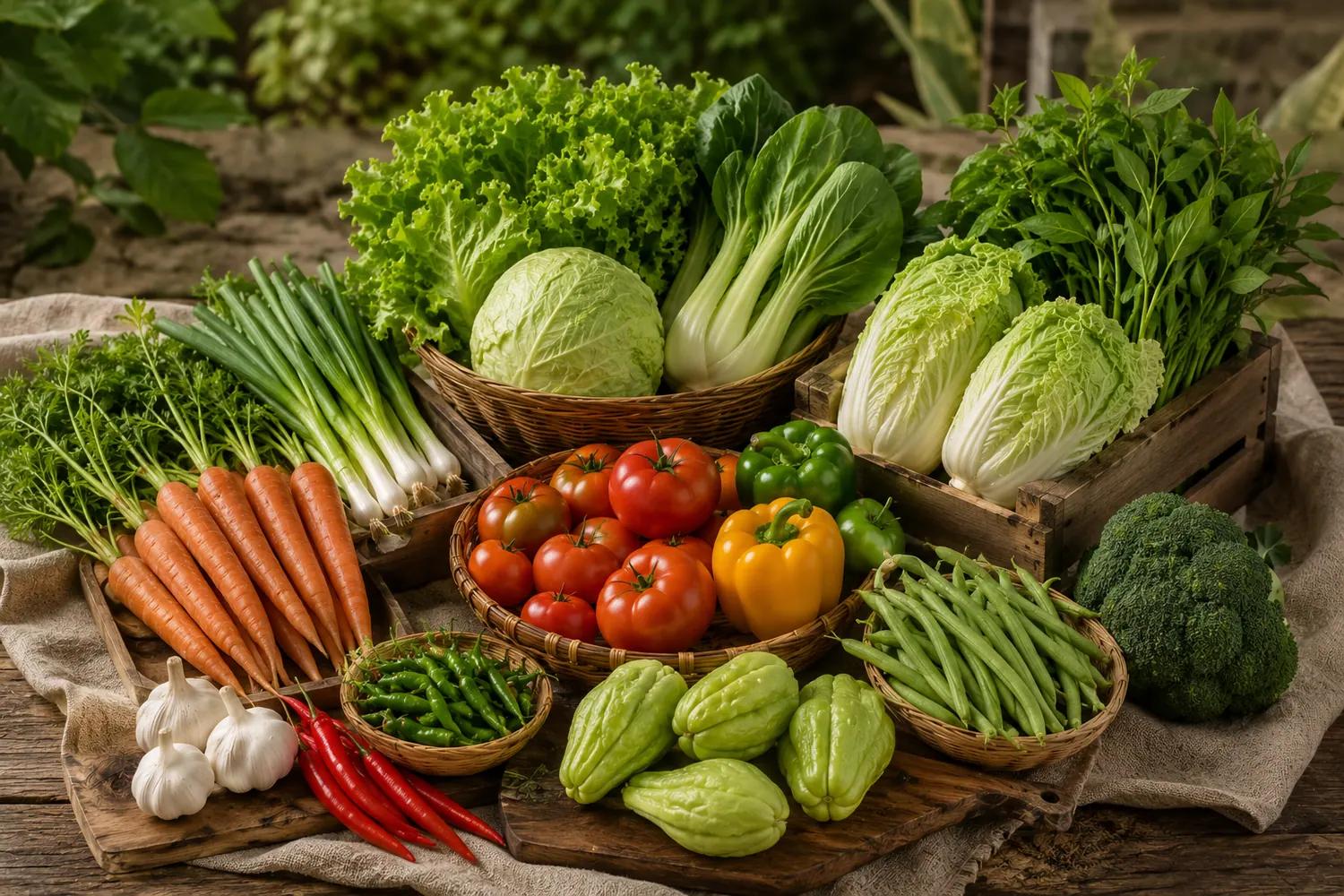
Fresh vegetable grading is an important part of selecting produce for retail, food service, distribution, and international markets. Buyers need to consider more than attractive color or uniform size when evaluating fresh vegetables.
Quality can also depend on maturity, firmness, freshness, physical defects, handling conditions, and packaging suitability. Different vegetables have different characteristics, so a single grading method cannot always be applied to every product.
Understanding these factors helps buyers communicate clearer product requirements and select vegetables for their intended applications.
Fresh Vegetable Grading: What Buyers Should Check
Fresh vegetable grading involves assessing produce against established or agreed quality characteristics.
Before grading, sorting helps separate vegetables with serious defects, decay, or unsuitable maturity from marketable products.
Grading then helps organize acceptable produce according to characteristics such as:
- Size: Length, diameter, weight, or other product-specific measurements.
- Shape: Uniformity and conformity with the expected variety.
- Color: Appropriate color for the vegetable type and maturity stage.
- Firmness: Suitable texture without excessive softness or deterioration.
- External condition: Absence of significant bruising, cracks, pest damage, or decay.
- Cleanliness: Freedom from excessive soil, foreign materials, and visible contamination.
Actual grade names and tolerances depend on the applicable standard, destination market, or agreement between buyer and supplier.
Freshness and Appearance of Common Vegetables
Different vegetable groups require different quality assessments.
1. Leafy Vegetables
Leafy vegetables may include lettuce, cabbage, Chinese kale, and other edible greens.
Important indicators include leaf freshness, appropriate color, suitable firmness, and absence of significant yellowing or decay.
Wilting may indicate moisture loss, while damaged leaves can reduce visual appeal and marketable quality.
2. Cucumbers
Cucumbers are commonly evaluated by length, diameter, shape, skin appearance, and firmness.
A suitable cucumber should generally be firm and free from serious shriveling, decay, and mechanical damage.
Skin color requirements depend on the variety and intended market.
3. Fresh Peppers and Chilies
Fresh peppers and chilies are important ingredients in many culinary applications.
Quality considerations include color, maturity, firmness, shape, and absence of damaged or decaying areas.
Green and red peppers may represent different stages of maturity, depending on the variety and product requirements.
4. Eggplants
Eggplants vary considerably in size, color, and shape.
Thai eggplants may be round or elongated, depending on the variety.
Buyers should evaluate appropriate maturity, firm texture, sound skin, and freedom from serious blemishes.
Uneven appearance does not always indicate poor quality because variety characteristics must be considered.
5. Long Beans
Long beans are often selected according to pod length, color, tenderness, and overall freshness.
Pods should be evaluated for suitability to the intended use.
Excessive shriveling, serious damage, and decay may indicate unacceptable quality.
6. Cabbage and Other Head Vegetables
Cabbage quality assessment may include head firmness, size, cleanliness, leaf condition, and absence of decay.
Appropriate trimming and careful handling help reduce unnecessary damage to outer leaves.
Why Freshness Matters
Fresh vegetables continue biological processes after harvesting.
Respiration, moisture loss, and other changes can gradually affect texture, appearance, and marketability.
The rate of deterioration depends on the vegetable type, maturity, environmental conditions, and handling practices.
Leafy vegetables are particularly sensitive to water loss, while certain fruiting vegetables, such as cucumbers, can suffer chilling injury when exposed to unsuitable low temperatures.
Therefore, maintaining freshness requires conditions suited to each commodity rather than applying one storage temperature to every vegetable.
Sorting, Grading, and Quality Inspection
Sorting and grading serve related but different purposes.
Sorting removes produce that does not meet basic marketability requirements. Grading organizes acceptable vegetables according to defined quality characteristics.
An inspection process may include visual evaluation, measurements, checking for defects, and reviewing product specifications.
For commercial purchases, buyers may request agreed size ranges, defect tolerances, packaging details, and other relevant quality information.
The FAO guidance on fresh-market preparation describes sorting, grading, and packaging as important operations in preparing fresh produce for sale.
Packaging Considerations for Fresh Vegetables
Packaging helps protect vegetables against physical damage during handling, transportation, and storage.
The packaging method should match the vegetable’s characteristics, required quantity, and expected distribution conditions.
Common packaging considerations include:
- Protection: Reducing crushing, bruising, and abrasion.
- Ventilation: Supporting suitable airflow where required.
- Cleanliness: Using appropriate, clean packaging materials.
- Capacity: Selecting suitable dimensions and net weight.
- Moisture management: Limiting unnecessary water loss while avoiding conditions that encourage deterioration.
- Identification: Providing relevant product, grade, quantity, and traceability information.
Packaging options may include ventilated plastic crates, corrugated cartons, liners, and other protective materials.
However, not every packaging type is suitable for every vegetable.
Packaging specifications should be confirmed according to the product and distribution requirements.
Handling and Storage Conditions
Appropriate handling is essential for maintaining fresh vegetable quality.
Vegetables should be protected from excessive heat, unnecessary exposure, crushing, and unsuitable storage conditions.
Temperature and humidity requirements differ among commodities.
For example, cucumbers require different temperature management from many leafy vegetables. Using unsuitable storage conditions may cause chilling injury, moisture loss, or accelerated deterioration.
The UC Davis Postharvest Research and Extension Center provides technical information on cucumber quality and postharvest handling.
Where relevant, buyers and suppliers should agree on appropriate handling and temperature requirements before shipment.
Understanding Buyer Quality Requirements
A clear product specification helps prevent misunderstandings between buyers and suppliers.
Before requesting a quotation, buyers should identify:
- Vegetable type and preferred variety.
- Required quality grade or acceptance criteria.
- Preferred size, maturity, and appearance.
- Expected quantity and packaging format.
- Intended use and destination country.
- Additional inspection, testing, or documentation requirements.
These details can help determine whether a proposed product is suitable for the intended market.
Food safety, pesticide residue limits, plant-health conditions, and import requirements must be checked separately where applicable.
Fresh Vegetable Sourcing with YA Corporation
YA Corporation Co., Ltd. is a Thailand-based international trading and sourcing company with a primary focus on food and agricultural exports.
Fresh vegetables are one of the company’s seven product groups, alongside fresh fruits, nuts and seeds, spices and herb powders, chilled and frozen meat, seafood and aquatic products, and other selected products.
YA Corporation operates as a trading and sourcing company rather than manufacturing products.
The company can review buyer requirements and explore vegetable sourcing opportunities based on supplier availability, agreed quality specifications, and applicable requirements.
YA Corporation is also preparing to expand its business into imports and welcomes relevant import-related inquiries for consideration.
All proposed product specifications and commercial arrangements remain subject to confirmation.
Contact YA Corporation
International buyers interested in fresh vegetables are welcome to contact YA Corporation to discuss their sourcing requirements.
Please include the vegetable type, variety, required quantity, quality specifications, preferred packaging, and destination country.
YA Corporation Co., Ltd.
Email : yacorporationthailand@gmail.com , info@yacorporationthailand.com
Website: https://yacorporationthailand.com/
All product availability, specifications, pricing, packaging arrangements, and regulatory requirements are subject to supplier confirmation and mutual agreement.
Comments are closed