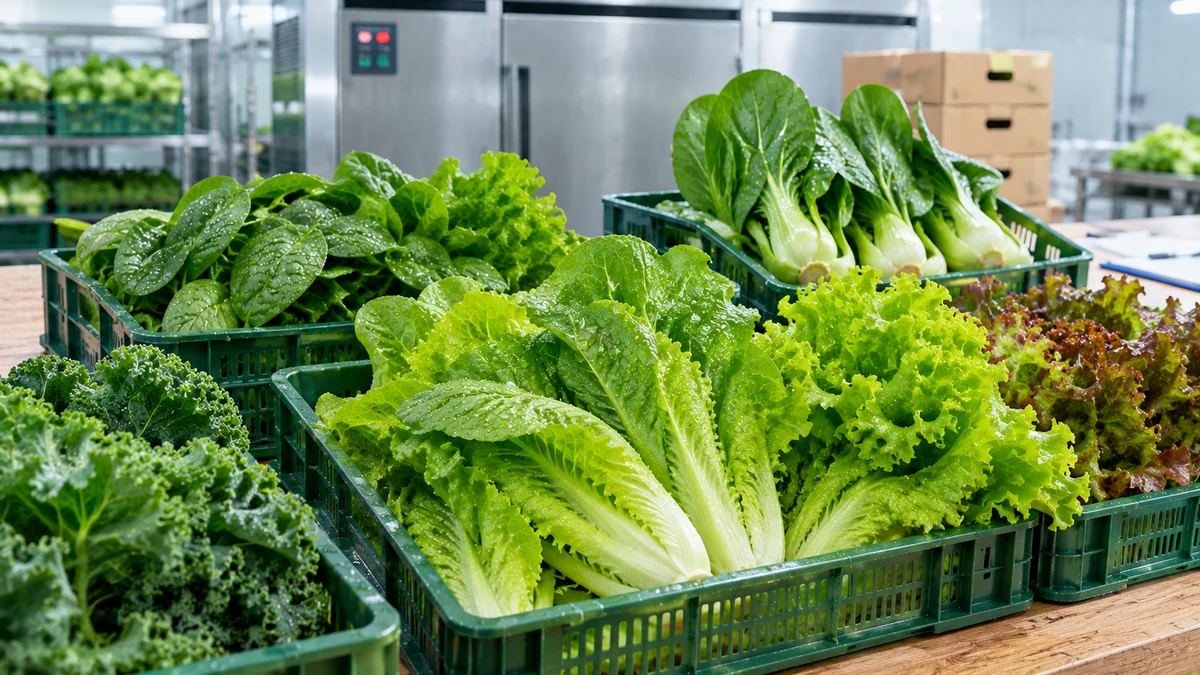
Fresh leafy vegetables are widely used in retail markets, food service, and food manufacturing because of their freshness, texture, appearance, and versatility in food preparation.
Products such as lettuce, spinach, kale, and bok choy have different physical characteristics, but many leafy vegetables share an important challenge: they can lose freshness rapidly when exposed to unsuitable temperatures, moisture conditions, or rough handling.
For international importers, distributors, and food buyers, understanding leafy vegetable quality, cooling methods, and packaging considerations helps establish suitable purchasing requirements.
This article explores the important characteristics of fresh leafy vegetables and practical factors affecting their post-harvest condition.
1. Understanding Fresh Leafy Vegetables
Fresh leafy vegetables include a wide variety of products harvested primarily for their edible leaves or tender stems.
Common examples include:
- Lettuce: Romaine, green leaf, red leaf, and other lettuce varieties.
- Spinach: Tender green leaves used in fresh and cooked food applications.
- Kale: Leafy vegetables with distinctive textures and leaf shapes.
- Bok Choy: A leafy brassica commonly used in Asian cooking.
- Other Leafy Greens: Selected culinary greens supplied according to market requirements.
These products differ in maturity, texture, flavor, handling characteristics, and storage requirements.
Buyers should therefore identify the exact product and variety before establishing quality specifications.
2. Important Quality Characteristics
The quality of fresh leafy vegetables is commonly evaluated through several visible and physical characteristics.
Color and Appearance
Healthy-looking leaves should generally display the color expected for their variety.
For many green leafy vegetables, significant yellowing may indicate aging or deterioration.
However, some varieties naturally have red or purple pigmentation.
Leaf Firmness and Freshness
Leaf turgidity is an important freshness indicator.
Leaves that have lost excessive moisture may become limp, wilted, or less crisp.
Physical Condition
Buyers should assess products for significant bruising, tearing, broken stems, decay, and other unacceptable defects.
Visual inspection is useful for assessing commercial quality, but appearance alone cannot confirm microbiological safety.
3. Why Cooling Matters After Harvest
Fresh leafy vegetables continue to respire after harvesting.
Higher temperatures generally accelerate physiological processes that can contribute to quality deterioration.
Removing field heat promptly can help preserve leaf freshness and reduce moisture loss.
Cooling methods vary according to the product, handling operation, and available equipment.
Examples include vacuum cooling, forced-air cooling, and hydrocooling where suitable.
The selected method should not introduce contamination or damage the product.
The UC Davis Postharvest Fact Sheet for Romaine and Loose-Leaf Lettuce explains that storage near 0°C can help optimize the post-harvest life of these lettuce types.
However, this temperature should not automatically be applied to every leafy vegetable without confirming its specific requirements.
4. Temperature and Humidity Considerations
Temperature and relative humidity both influence the condition of leafy vegetables.
Many temperate leafy greens benefit from low storage temperatures and high relative humidity.
For example, UC Davis identifies approximately 0°C and 95–98% relative humidity as recommended conditions for spinach.
However, inappropriate conditions can still cause problems, including freezing injury, excessive condensation, and product deterioration.
Different vegetables may have different sensitivities to chilling and moisture.
Buyers should confirm product-specific handling requirements instead of using one temperature setting for every mixed shipment.
5. Packaging for Fresh Leafy Vegetables
Suitable packaging helps protect leafy vegetables from physical damage, contamination, and excessive moisture loss.
Packaging selection depends on the product, shipment duration, and intended market.
Plastic Crates
Reusable or single-use crates may provide structural support and ventilation during handling.
They should be appropriate for food contact and maintained in hygienic condition.
Cartons and Boxes
Corrugated cartons may be suitable for certain leafy vegetables when designed to provide adequate strength, ventilation, and protection.
Bags and Protective Films
Certain packaging films can help reduce moisture loss.
However, packaging must be suitable for the product’s respiration characteristics and the intended storage conditions.
An inappropriate package atmosphere or excessive condensation may reduce product quality.
Packaging should never be assumed to replace proper cooling or hygienic handling.
6. Common Problems During Handling and Transportation
Fresh leafy vegetables are sensitive to several types of quality deterioration.
Wilting: Excessive moisture loss can reduce firmness and visual freshness.
Yellowing: Leaf color changes may occur during aging, unsuitable storage, or exposure to ethylene.
Bruising and Mechanical Damage: Rough handling or excessive pressure can damage tender leaves.
Decay: Damaged or poorly handled produce may become more susceptible to deterioration.
Freezing Injury: Temperatures below the product’s freezing tolerance can damage leaf tissues.
For some leafy vegetables, exposure to ethylene-producing fruits during storage or transportation can accelerate undesirable changes.
Product compatibility should therefore be considered when planning mixed loads.
7. Food Safety and Product Quality
Maintaining a desirable appearance does not guarantee that a leafy vegetable is safe to eat.
Food safety considerations may include agricultural water, hygiene during harvesting, handling surfaces, packaging operations, and contamination prevention.
When washing or hydrocooling is used, water quality and appropriate process controls are important.
Cooling can help manage product temperature but does not reliably eliminate harmful microorganisms.
International buyers should evaluate supplier food safety arrangements and applicable destination-market requirements separately from appearance and grading specifications.
8. What International Buyers Should Confirm
Before purchasing fresh leafy vegetables, buyers should prepare clear product requirements.
Important information may include:
- Product name and variety
- Required maturity and appearance
- Leaf size or other grading criteria
- Acceptable quality defects
- Estimated purchasing quantity
- Packaging type and net weight
- Storage and transportation requirements
- Destination country and required documentation
For products requiring refrigeration, buyers should also confirm the intended temperature range, shipment duration, and handling responsibilities.
Representative samples, product specifications, and appropriate quality checks may support supplier evaluation.
9. Fresh Vegetable Sourcing with YA Corporation
YA Corporation Co., Ltd. is a Thailand-based trading and sourcing company focusing primarily on international exports of food and agricultural products.
Fresh vegetables are one of the company’s seven product groups, alongside fresh fruits, nuts and seeds, spices and herb powders, chilled and frozen meat, seafood and aquatic products, and other products considered individually.
The company’s main product focus also includes dry spice powders, seasoning ingredients, and herb powders.
YA Corporation operates as a trading and sourcing company rather than growing or manufacturing the products described in this article.
The company reviews buyer requirements, explores suitable sourcing options, and coordinates product and commercial information.
International exports remain the primary business focus. Suitable import-related inquiries may also be considered according to product requirements and operational readiness.
Actual product varieties, availability, cooling arrangements, packaging options, and commercial conditions must be confirmed with the relevant supplier.
10. Contact YA Corporation Co., Ltd.
International importers, distributors, and food buyers interested in sourcing fresh leafy vegetables or other fresh agricultural products are welcome to submit inquiries.
Please provide the product variety, quality requirements, estimated quantity, packaging preferences, delivery requirements, and destination country.
Email : yacorporationthailand@gmail.com , info@yacorporationthailand.com
Website: https://yafreshproduce.com/
All product availability, specifications, quality grades, cooling arrangements, packaging options, prices, documentation, and commercial terms are subject to supplier confirmation, applicable regulations, and mutual agreement.
Comments are closed