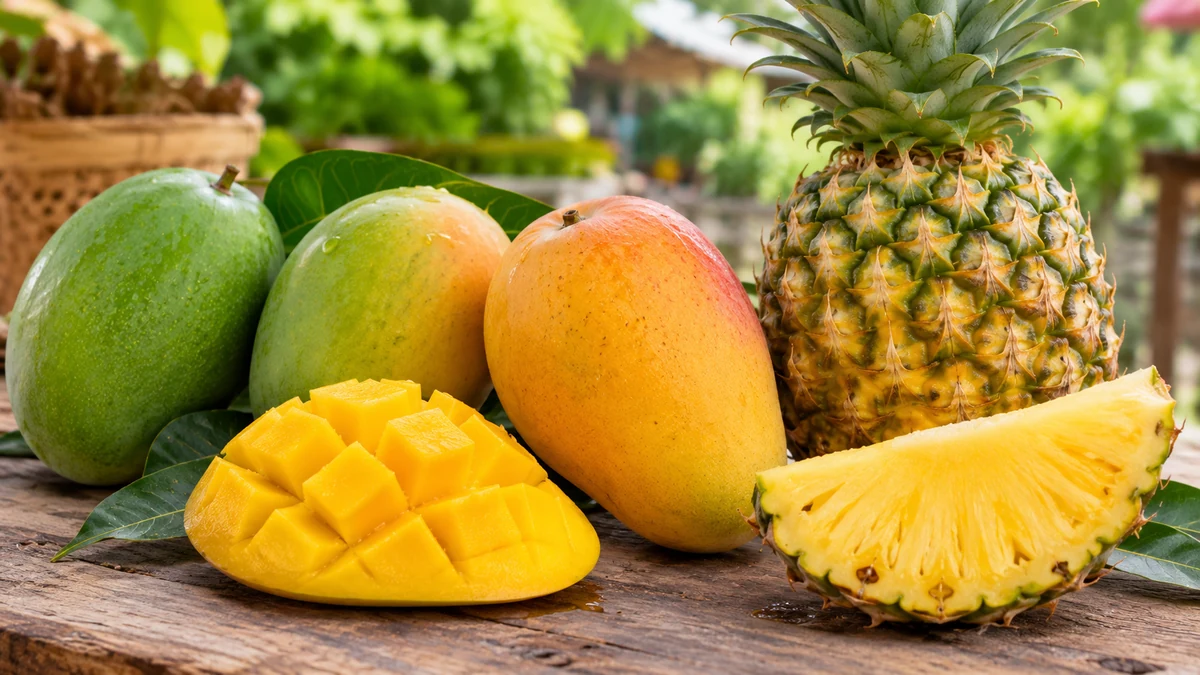
Mango and pineapple quality is an important consideration for international buyers sourcing tropical fruits. Both fruits are valued for their distinctive flavors, aromas, attractive appearance, and versatility in fresh consumption and food processing.
However, mangoes and pineapples differ significantly in their ripening behavior, maturity indicators, texture, and quality characteristics.
For importers, distributors, and food manufacturers, understanding these differences helps establish appropriate product requirements and select fruit suitable for intended applications.
This article explores mango and pineapple ripeness, appearance, quality evaluation, and important considerations for international fruit buyers.
1. Understanding Mango and Pineapple Quality
Fruit quality involves several characteristics, including maturity, appearance, firmness, flavor, freedom from significant defects, and suitability for the intended market.
Mangoes and pineapples should not be evaluated using identical ripeness criteria.
Mangoes are climacteric fruits, meaning properly mature fruit can continue to ripen after harvest.
Pineapples are non-climacteric fruits and do not undergo the same post-harvest ripening process.
This distinction is especially important when planning fruit selection, handling, and distribution.
2. Mango Ripeness and Maturity Characteristics
Mangoes belong to the species Mangifera indica L.
Different mango cultivars have distinctive shapes, skin colors, flesh colors, aromas, and textures.
Skin Color
Mango skin may appear green, yellow, orange, red, or a combination of colors.
However, external color alone is not always a reliable indicator of ripeness.
Some mango cultivars remain partly green even when ripe, while red coloration in certain varieties does not necessarily indicate suitable maturity.
Flesh Color and Firmness
As mangoes ripen, their flesh generally becomes softer and may develop a deeper yellow or orange color.
The extent of these changes depends on the cultivar.
Flavor and Aroma
Ripening involves changes in starch, sugars, acidity, and aromatic compounds.
These changes contribute to the characteristic sweetness and aroma of ripe mangoes.
Buyers should therefore consider cultivar-specific maturity standards rather than relying on appearance alone.
3. Pineapple Ripeness and Maturity Characteristics
Pineapples belong to the species Ananas comosus.
They are recognized for their sweet-tart flavor, juicy texture, and distinctive external appearance.
Unlike mangoes, pineapples should be harvested at a suitable maturity stage because they do not develop substantially greater eating quality through typical post-harvest ripening.
External Color
Pineapple skin may change from green toward yellow as the fruit matures.
However, the relationship between external color and internal quality depends on cultivar and growing conditions.
Sweetness and Acidity
Soluble solids content, commonly expressed in degrees Brix, is one indicator used when evaluating pineapple sweetness.
Acidity also contributes to flavor balance.
These measurements should be interpreted together with cultivar characteristics and the intended product specification.
Firmness and Appearance
Buyers should examine fruit firmness, overall shape, crown condition, and freedom from decay or significant physical damage.
A pineapple that appears attractive externally may still require additional quality evaluation.
4. Mango vs. Pineapple: Key Quality Differences
Although both fruits are tropical agricultural products, they behave differently after harvest.
Ripening Behavior
Mature mangoes can continue ripening after harvest.
Pineapples do not undergo comparable post-harvest ripening and should be harvested at suitable eating maturity.
Skin Appearance
Mangoes display a wide variety of cultivar-dependent colors.
Pineapples have a distinctive patterned rind that may develop yellow coloration as maturity progresses.
Flesh Texture
Mango flesh may range from firm to soft, with varying fiber characteristics.
Pineapple flesh generally has a fibrous, juicy structure with its own texture characteristics.
Flavor Profile
Mangoes are known for their sweet, aromatic flavor, with variation between cultivars.
Pineapples provide a characteristic sweet-tart flavor influenced by sugar and acidity.
Neither fruit should be judged solely by skin color.
5. Common Quality Defects to Consider
International fruit buyers should identify unacceptable defects before confirming a purchase.
Mango Quality Defects
Potential concerns include bruising, skin abrasions, sapburn, decay, uneven ripening, and internal flesh disorders.
Some defects may become more noticeable during ripening or storage.
Pineapple Quality Defects
Potential concerns include bruising, cracks, sunburn, decay, internal breakdown, and unsuitable crown condition.
The importance of individual defects depends on the agreed grade and intended use.
Appropriate sampling and inspection help buyers determine whether fruit meets the required quality criteria.
6. Size, Grading and Product Selection
Size and grading are important considerations when purchasing fresh tropical fruits.
Mangoes may be classified according to variety, size, weight, appearance, and agreed quality criteria.
Pineapples may also be graded by size, weight, shape, external appearance, and other specifications.
Different buyers may require different fruit sizes for retail sales, food service, or processing applications.
The Codex Alimentarius Committee on Fresh Fruits and Vegetables identifies separate standards for mangoes (CXS 184-1993) and pineapples (CXS 182-1993).
These standards provide useful reference information, although destination-market regulations and contractual specifications must be checked separately.
7. Storage and Post-Harvest Handling
Suitable post-harvest handling is important for maintaining tropical fruit quality.
Mangoes and pineapples have different temperature requirements depending on their maturity and ripeness stages.
Improper temperature management may contribute to chilling injury, reduced quality, or accelerated deterioration.
Physical handling also matters because excessive pressure, dropping, and unsuitable packaging can damage fruit.
For technical reference, buyers can review the University of California, Davis Mango Postharvest Fact Sheet and Pineapple Postharvest Fact Sheet.
Actual storage and transportation conditions should be established according to the fruit variety, maturity stage, shipment duration, and supplier recommendations.
8. Choosing Mangoes and Pineapples for Different Applications
Fresh tropical fruits may be purchased for retail distribution, food service, or food processing.
For fresh retail sales, buyers may prioritize visual appearance, suitable maturity, firmness, and shelf-life expectations.
For food service, desired ripeness and consistency of flavor may be particularly important.
For processing applications, buyers may evaluate flesh characteristics, sweetness, acidity, and suitability for the intended manufacturing process.
Product selection should be based on the buyer’s actual requirements rather than assuming that the same grade is suitable for every application.
9. Mango and Pineapple Sourcing with YA Corporation
YA Corporation Co., Ltd. is a Thailand-based trading and sourcing company focusing primarily on international exports of food and agricultural products.
Fresh fruits are one of the company’s seven product groups, alongside fresh vegetables, nuts and seeds, spices and herb powders, chilled and frozen meat, fresh and frozen seafood and aquatic products, and other products considered individually.
YA Corporation operates as a trading and sourcing company rather than growing or manufacturing the products described in this article.
The company reviews buyer requirements, explores suitable sourcing options, and coordinates product and commercial information.
International exports remain the company’s primary business focus. Suitable import-related inquiries may also be considered according to product requirements and operational readiness.
Fruit varieties, availability, grades, packaging options, and commercial conditions must be confirmed with the relevant supplier before any commitment.
10. Contact YA Corporation Co., Ltd.
International importers, distributors, and food manufacturers interested in sourcing mangoes, pineapples, or other fresh fruits are welcome to submit product inquiries.
Please provide the required fruit variety, preferred maturity stage, size or grade, estimated quantity, packaging requirements, and destination country.
Email : yacorporationthailand@gmail.com , info@yacorporationthailand.com
Website: https://yafreshproduce.com/
Explore Our Fresh Produce Website
All product varieties, quality grades, harvest availability, packaging options, documentation, pricing, and commercial arrangements are subject to supplier confirmation, applicable requirements, and mutual agreement.
Comments are closed