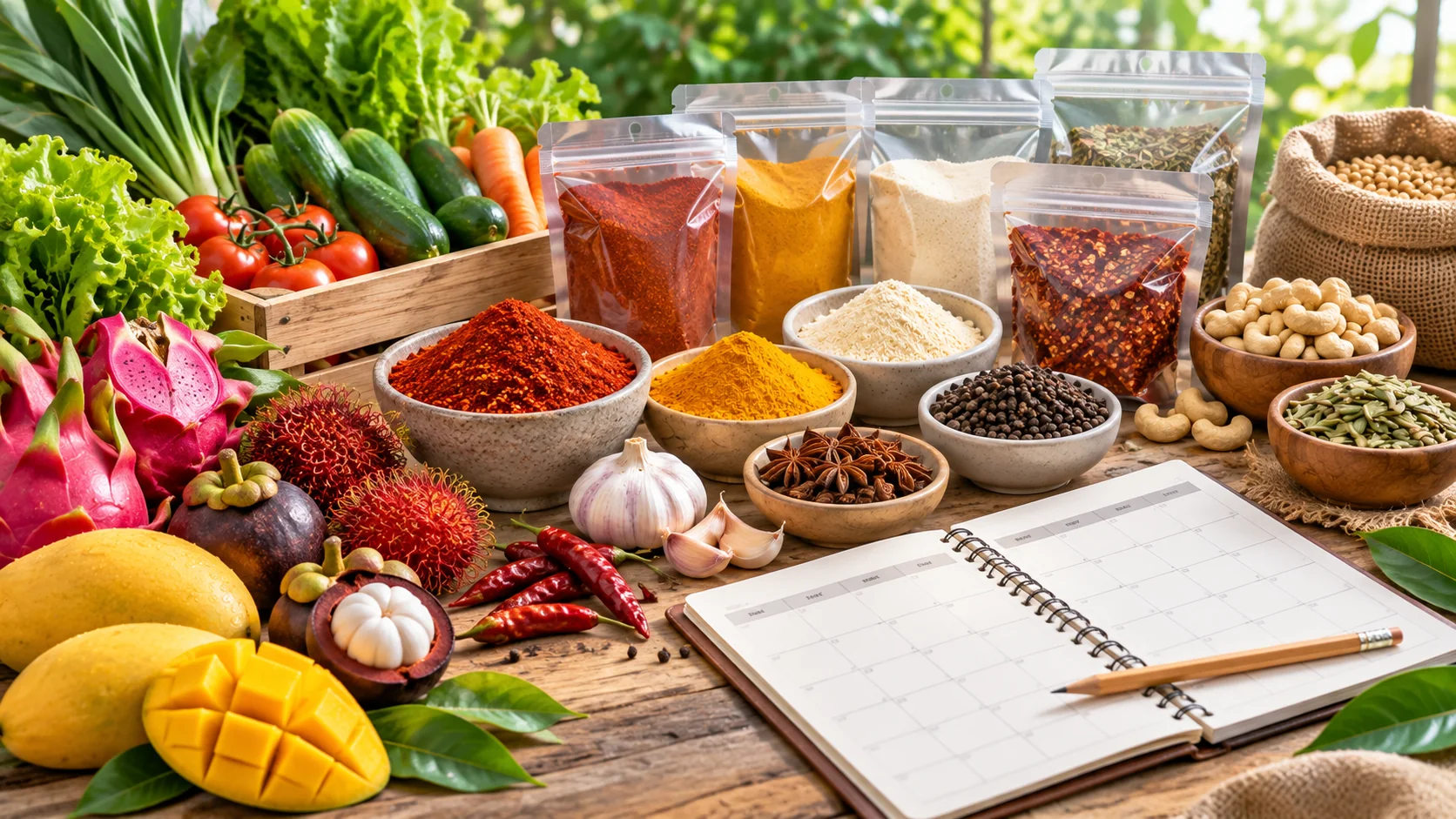
Seasonal product availability is an important consideration for international buyers sourcing food and agricultural products. Harvest periods, weather conditions, production schedules, and storage requirements can influence when particular products are available and in what quantities.
For importers, distributors, and food manufacturers, understanding these factors can support more effective product sourcing and purchasing decisions.
YA Corporation Co., Ltd. is a Thailand-based trading and sourcing company with a primary focus on international food and agricultural exports. Its main product focus includes spices, seasoning ingredients, and herb powders, alongside six other product groups.
This article explains how buyers can evaluate seasonal product availability and prepare their product requirements before contacting suppliers.
1. Understanding Seasonal Product Availability
Seasonal product availability refers to changes in the supply of particular products throughout the year.
Agricultural products follow different growing and harvesting cycles. Availability may vary according to crop variety, production region, weather conditions, and farming practices.
For example, some tropical fruits have distinct harvest periods, while certain vegetables may be cultivated during multiple growing seasons.
However, harvest season does not necessarily equal confirmed commercial availability.
Actual supply also depends on product quality, harvest volume, processing capacity, existing inventory, and supplier commitments.
International buyers should therefore verify availability directly rather than relying solely on general seasonal assumptions.
2. Seasonal Availability of Fresh Fruits
Fresh fruits are among the agricultural products most directly influenced by harvest periods.
Examples of Thai tropical fruits include mango, mangosteen, rambutan, longan, durian, and other fruit varieties.
Harvest timing can differ between products, growing regions, and individual production years.
For international buyers, important considerations include:
- Preferred fruit variety
- Expected harvest period
- Required ripeness or maturity
- Size and quality specifications
- Available packing formats
- Intended purchasing quantity
- Destination-market requirements
A buyer requiring a particular fruit variety should discuss the expected sourcing period before planning a shipment.
The ability to supply fresh fruit also depends on product condition, handling arrangements, and applicable regulations.
3. Seasonal Availability of Fresh Vegetables
Vegetable production may also be influenced by weather, rainfall, temperature, and regional growing conditions.
Different vegetables have different cultivation requirements.
For example, leafy vegetables, root vegetables, and fruiting vegetables may respond differently to changing environmental conditions.
Even where a product can be cultivated during several periods of the year, quality, availability, and prices may vary.
Buyers should confirm the required variety, grade, packaging, quantity, and expected delivery period.
Suitable post-harvest handling is also important because fresh vegetables can deteriorate rapidly under inappropriate storage conditions.
4. Seasonal Planning for Spice and Herb Powders
Spices, seasoning ingredients, and herb powders are central to YA Corporation’s product sourcing focus.
Examples include chili powder, turmeric powder, garlic powder, onion powder, ginger powder, lemongrass powder, galangal powder, and black pepper powder.
Unlike freshly harvested products, properly processed and stored dry ingredients may remain available beyond the original harvesting period.
However, this does not guarantee continuous supply.
Availability may depend on raw material harvests, drying capacity, processing schedules, inventory conditions, and supplier production arrangements.
Important Quality Considerations
When planning the purchase of spice or herb powders, buyers should confirm:
- Required product specifications
- Moisture and particle size requirements
- Color and aroma characteristics
- Packaging and storage requirements
- Expected purchasing frequency
- Available stock and production lead times
For example, a food manufacturer requiring regular deliveries of turmeric powder should discuss product specifications and expected quantities with potential suppliers.
This helps determine whether the requested purchasing schedule is commercially feasible.
For more information, read Thai Spice Powder Sourcing.
5. Availability of Nuts and Seeds
Nuts and seeds have their own production and harvesting cycles.
Depending on the product, appropriate drying and storage may allow inventory to remain available beyond the harvest period.
However, quality and supply conditions still require verification.
Important considerations may include moisture content, physical defects, storage conditions, product origin, and relevant food safety requirements.
Buyers should distinguish between seasonal harvest availability and the availability of properly maintained commercial stock.
6. Meat and Seafood Supply Considerations
Seasonal supply planning is not limited to agricultural crops.
For chilled and frozen meat products, availability can depend on livestock production, processing schedules, approved facilities, inventory, and applicable trade requirements.
For fish and other aquatic products, availability may also be influenced by fishing seasons, aquaculture production cycles, weather conditions, and resource-management restrictions.
Frozen storage may help maintain inventory beyond the original production period, provided appropriate handling and temperature conditions are maintained.
However, frozen storage does not guarantee product availability or regulatory eligibility.
Buyers should verify product form, specifications, quantities, temperature requirements, and supplier capabilities before making commercial commitments.
7. How Buyers Can Plan Product Requirements
Effective purchasing plans begin with clearly defined requirements.
An international buyer can prepare a product sourcing inquiry containing:
- Product name and variety
- Required quality specifications
- Estimated order quantity
- Preferred purchasing or delivery period
- Packaging requirements
- Destination country
- Required documentation
- Acceptable alternatives, where appropriate
For regularly purchased ingredients, buyers may also prepare a forecast showing expected requirements over several months.
Forecasts help communicate purchasing intentions but should not be treated as confirmed orders or guaranteed supply agreements.
Using Seasonal and Market Information
The FAO Crop Calendar provides reference information about planting and harvesting periods for selected crops and countries.
Buyers can also review the USDA Specialty Crops Market News for examples of published market information on fruit and vegetable supply conditions, particularly in U.S. markets.
These resources can support preliminary research, but actual product availability and local market conditions still require confirmation.
8. Product Availability and Quality Requirements
A product being available does not automatically mean it meets the buyer’s quality requirements.
Before confirming an order, buyers should evaluate product specifications, packaging suitability, applicable testing requirements, and relevant supporting documents.
For fresh produce, appropriate storage temperatures and post-harvest management are important to preserving product condition.
The FAO’s guidance on post-harvest management provides additional information on temperature and relative humidity management for horticultural products.
Requirements must be evaluated according to the product and intended market.
9. YA Corporation’s Trading and Sourcing Approach
YA Corporation Co., Ltd. operates as a trading and sourcing company rather than manufacturing the products discussed in this article.
The company reviews buyer requirements, explores suitable sourcing options, and coordinates product and commercial information.
The company’s broader sourcing scope covers seven product groups: fresh fruits, fresh vegetables, nuts and seeds, spices and herb powders, chilled and frozen meat, fresh and frozen seafood and aquatic products, and other products considered according to individual requirements.
The company’s primary business direction is international exports, while suitable import-related inquiries may also be considered according to product requirements and operational readiness.
Availability, quantities, specifications, pricing, and delivery arrangements must be confirmed before any commercial commitment.
10. Contact YA Corporation Co., Ltd.
International buyers interested in sourcing Thai food and agricultural products are welcome to submit inquiries regarding product availability, specifications, estimated quantities, and preferred purchasing periods.
Providing clear requirements can help support discussions about suitable sourcing opportunities.
Email : yacorporationthailand@gmail.com , info@yacorporationthailand.com
Website: https://yacorporationthailand.com/
Product availability, harvest periods, quantities, specifications, prices, documentation, and commercial arrangements are subject to supplier confirmation, applicable requirements, and mutual agreement.
Comments are closed